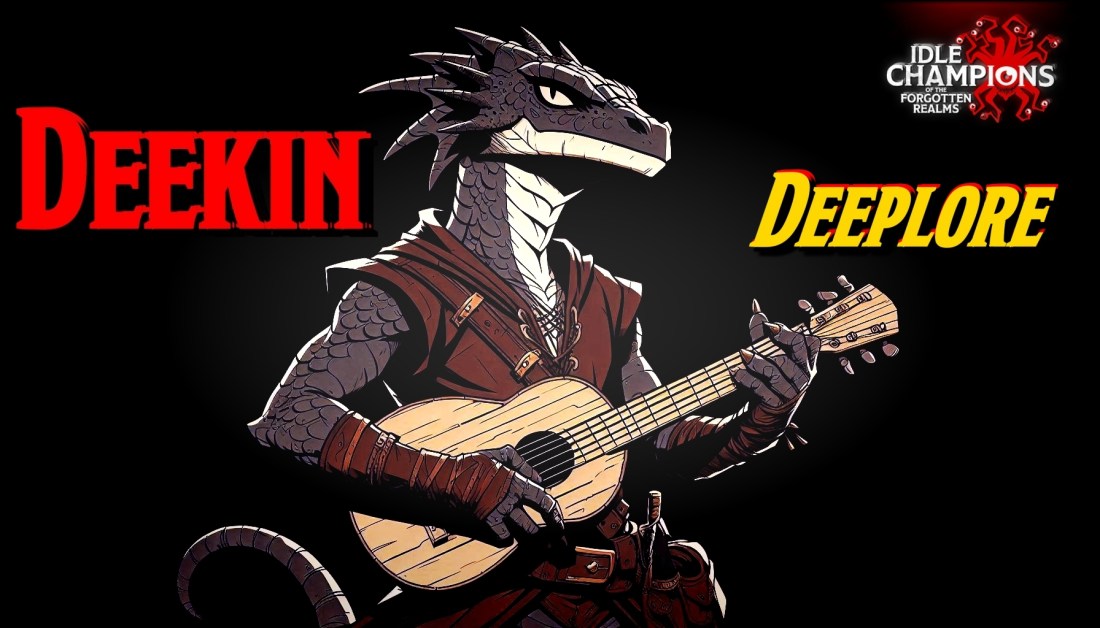
D&D Deeplore: Deekin Scalesinger – The Kobold Who Shouts DOOOOOM!

Deekin Scalesinger – a kobold bard with trembling scales, a quavering voice, and a heart that refuses to shrink to match his size. To many, he appears as comic relief: anxious, excitable, forever teetering on the edge of panic. A creature who shouts “Doom!” with such earnestness that it almost sounds like prophecy. But Deekin is not a joke.
He is a spark.


He does not dominate the battlefield through strength or spellcraft. He shapes its tempo through emotion. He does not command through authority. He commands through belief. And in a formation filled with giants, gods, and legends, it is the smallest voice that often pushes the story forward.

To understand Deekin, one must remember where he began. In Neverwinter Nights: Shadows of Undrentide, he first appears not as a warrior, but as a companion – nervous, earnest, and endlessly curious. Kobolds in the Forgotten Realms are fragile, numerous, and easily overlooked. They survive through traps, tunnels, and fear.
Deekin survives through narrative.

He attaches himself to heroes not because he expects protection, but because he is drawn to greatness. He believes in stories – dangerous ones, heroic ones, the kind that reshape the world. And he believes, with stubborn sincerity, that even a kobold can matter if he stands close enough to the moment where legends are forged.

He does not slow the world down. He urges it onward. He does not make the party safer. He makes the moment sharper. He does not wait for the story to unfold. He leans into it.

Deekin’s signature ability, Story of Doom, is often misunderstood. A kobold shouting “Doom!” should be comedic. And yet, somehow, those beside him grow stronger. Mechanically, it is adjacency-based buffing. Narratively, it is something deeper:

Deekin believes what he says.

When he cries “Doom!”, he is not performing. He is reacting. He feels the danger, the fragility of the moment, the sense that everything could collapse if the party hesitates. And because he feels it so intensely, those near him feel it too.

His urgency is not calculated.
His panic is not strategy.
His drama is not performance.
It is honesty – raw, unfiltered, unpolished.

And that honesty becomes strength. A routine encounter suddenly feels like a final stand. A simple skirmish becomes a moment that demands everything. Deekin does not reframe the battlefield with cold intention. He reframes it because his heart is convinced the world might end – and because he refuses to let it end quietly.

Heroes rise when someone beside them trembles and still chooses to sing.
This is not a global aura. It is not the voice of a commander shouting from afar.
Deekin inspires through closeness.

His power works best when someone stands shoulder to shoulder with him – close enough to hear the tremor in his voice, close enough to feel the urgency radiating off him, close enough to understand that his fear is real and his courage is, too.
He does not lead from a throne – he supports.

Deekin stands between heroes, small and shaking, and reminds them that the moment matters. His presence is not imposing. It is grounding. His fear does not weaken the party. It focuses them.
He does not mask his fear behind bravado. That transparency is what makes him trustworthy.
He is not the hero of the tale. He is the one who convinces the heroes that the tale is worth fighting for.

Then there is Confidence in the Boss, the ability that increases enemy spawns. On paper, it seems reckless. Why would anyone invite more danger? But Deekin’s logic is not the logic of a tactician. It is the logic of someone who grew up in a world where safety was never guaranteed.
For a kobold, danger is not escalation. It is the baseline. Tunnels collapse. Dragons pass overhead. Adventurers wander in with torches and steel.
Threats are constant, unpredictable, and rarely fair. Deekin does not see more enemies as a worsening situation. He sees it as honesty – the world revealing itself without pretense.
He does not escalate the threat. He recognizes it.
And in recognizing it, he accelerates the confrontation. If the world is going to test the party, better it test them now – while they are together, while they are ready, while the story still has breath.
This is not nihilism. It is courage sharpened by experience.

What makes Deekin compelling is not that he is powerful. It is that he is aware. He knows how small he is. He knows how fragile kobolds are. He knows how easily heroes fall. And yet he steps into formation anyway.

He does not try to become a dragon.
He does not try to become a legend.
He tries to make the moment matter.
He does not promise victory.
He promises significance.

And that is often the greater gift. In a roster filled with divine avatars and reality-bending spellcasters, Deekin reminds us that greatness is not measured in size or strength, but in the willingness to stand at the edge of doom and raise your voice anyway.

In the end, Deekin Scalesinger is not defined by his size, his fear, or even his cry of “Doom!” He is defined by the way he transforms that fear into momentum. He is defined by the way he stands close enough for others to feel his trembling – and close enough for them to draw strength from it.

He does not sing because the world is safe.
He sings because it is not.
He sings because someone must.
He sings because stories deserve witnesses.

And in singing at the edge of doom, he turns that doom into the very thing that drives the party forward.
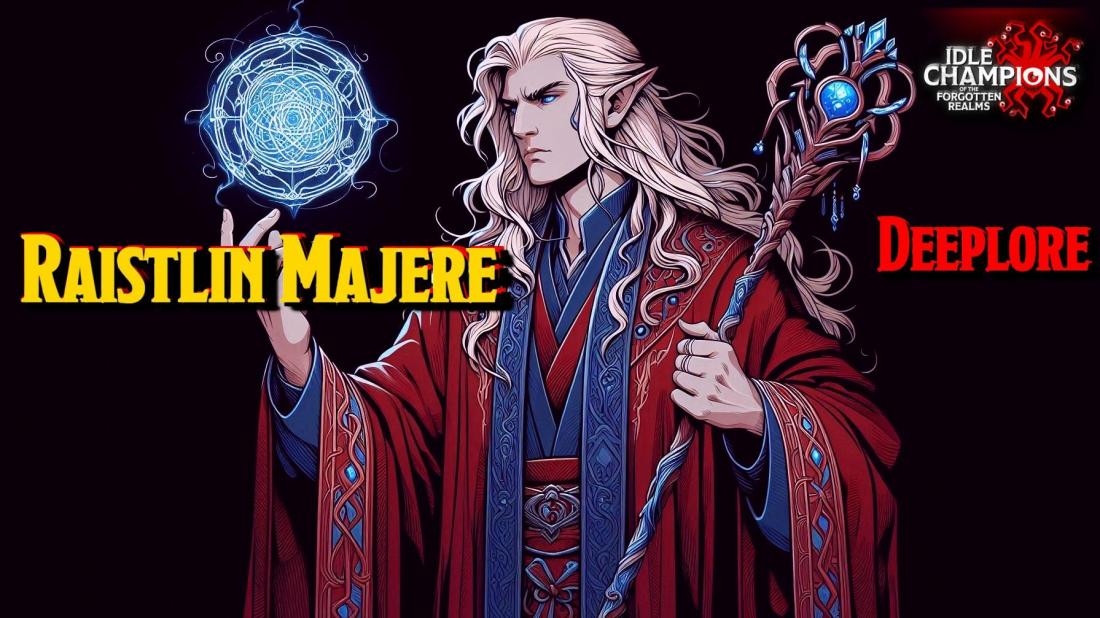
D&D Deeplore: Raistlin Majere – The Shadow behind the Hourglass


Among the many figures who stride across the history of Krynn, few inspire such fascination and unease as Raistlin Majere. He is neither hero nor simple villain. He is a man shaped by weakness, sharpened by suffering, driven by ambition that borders on the divine. This is the deep lore of Raistlin – the frail child who challenged gods.

Raistlin was born in Solace, among vallenwood trees and suspended homes. He arrived prematurely, small and sickly, barely clinging to life. His twin brother Caramon followed – healthy and strong. From the beginning, Raistlin lived in contrast.

His mother, Rosamun, possessed faint magical sensitivity and unstable prophetic dreams. His father, Gilon, was simple and hardworking. Raistlin inherited neither strength nor warmth, but a mind that refused the limits of his body.

Bullied for his frailty, he could not fight – but he could observe and plan. When he witnessed a traveling mage perform illusions, something crystallized. Magic was the one arena where physical strength meant nothing. His family gathered enough coin to send him to the Academy of Magic in Wayreth, where his true path began.

At Wayreth, his brilliance was undeniable. He mastered arcane theory with precision that impressed even seasoned instructors. Yet talent brought no acceptance. Peers mocked him; masters sensed dangerous ambition.

He learned early that respect would not be granted – it had to be taken. His demeanor hardened. He manipulated when necessary. Not for cruelty’s sake, but because it worked. All of it led to the defining moment of his life: the Test of High Sorcery.

The Test is a crucible designed to push a mage to the brink of death. The Conclave feared Raistlin’s ambition and crafted a harsher trial.

He faced betrayal, temptation, and death. Most infamous was the vision of Caramon as a monstrous brute – the embodiment of strength he lacked. Raistlin chose to kill the illusion. It revealed his ruthlessness and his refusal to be overshadowed again.

He passed – at terrible cost. His health shattered. His skin turned golden, his hair white, his eyes became hourglasses. Through them he saw decay: flowers withering, food rotting, people aging before him. The world revealed itself as entropy.

This was the mark of Fistandantilus, a legendary archmage whose shadow would shape his future. The Test did not merely change him. It defined him.

Raistlin’s weakness was not incidental – it was foundational. Chronic coughing, exhaustion, constant pain. He relied on Caramon for protection.

But weakness forged discipline. He compensated with preparation and precision. He struck first and decisively. His vulnerability became ambition. Where others relied on muscle, Raistlin relied on inevitability.

Their bond is among the most complex in fantasy. Caramon was strong, loyal, kind. Raistlin was sharp, distant, brilliant.

They depended on each other: one guarding the body, the other guiding the mind. Yet resentment festered. Raistlin hated pity. He hated needing protection. He loved his brother – and envied him. That tension fueled his drive for supremacy.

During the War of the Lance, Raistlin joined the Heroes of the Lance. Frail but lethal, he wielded magic with precision and unraveled ancient lore.

After the war, his ascent accelerated. He pursued the secrets of Fistandantilus, mastering forbidden knowledge – and eventually surpassing the archmage himself.

His ambition crystallized into a single goal: to challenge the goddess Takhisis and claim godhood.

His hourglass eyes symbolized his worldview. He saw fragility, decay, and the relentless march of time.

This vision stripped away illusion and comfort. It made him analytical, detached, often cruel. Raistlin did not see the world as it was – he saw how it would end.

He is often labeled evil, yet he is driven less by malice than by purpose.

Power, to him, defines worth. Weakness invites ruin. Destiny must be seized.

He could show compassion or loyalty – but rarely without calculation. Raistlin is neither hero nor villain. He is will made manifest.

His quest for godhood was the natural culmination of his life. He traveled through time, confronted Fistandantilus, and challenged Takhisis herself.

In one timeline, he succeeds. He kills the Queen of Darkness and ascends – only to discover his triumph leaves the world desolate. His victory becomes emptiness.

In that moment, he makes his most unexpected choice. He abandons his ambition and sacrifices himself – not from heroism, but from clarity. He sees the end and refuses to let it stand.

Raistlin endures because he embodies the paradox of power: weak in body, relentless in will; manipulative, yet capable of sacrifice; feared and unforgettable.

He forces us to confront uncomfortable truths about ambition and consequence. Raistlin is not someone you simply admire. He is someone you remember.

Raistlin Majere is ambition sharpened by suffering – a mage who clawed from frailty to near-divinity. A man who saw the world’s decay and sought to master it.

A legend forged not by strength, but by will. Not good. Not evil. Inevitable.

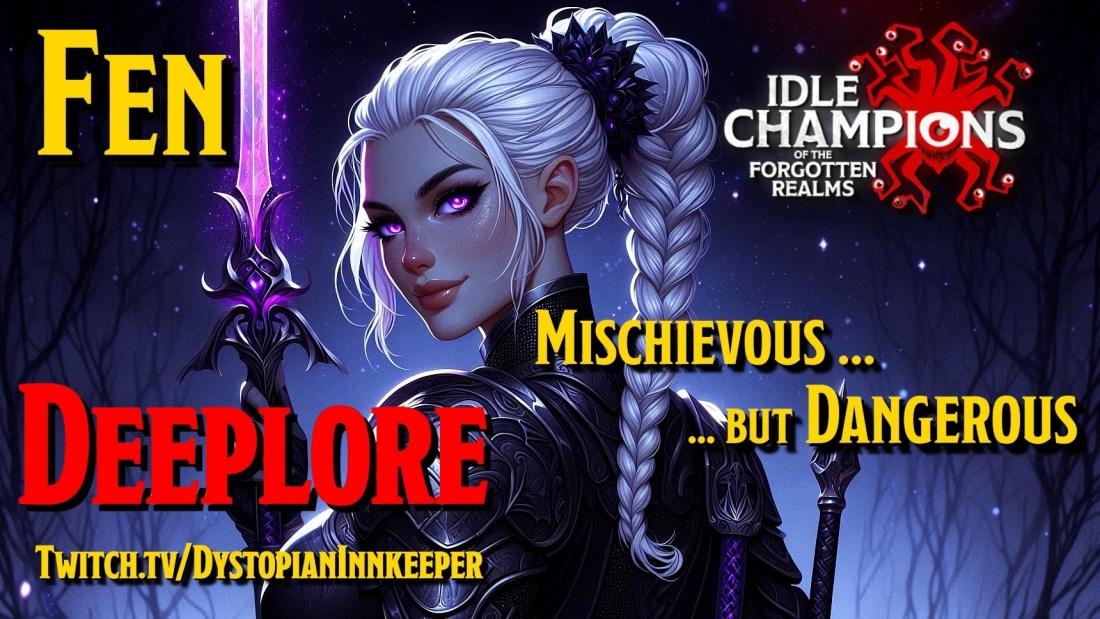
D&D Deeplore: Fen – The Art of Survival


Fen is a Wildhunt Shifter, and that already tells you more about her than any dramatic backstory could. Shifters grow up learning to read the world before it reads them. They learn who to trust, who to avoid, and when to move on. Fen didn’t become cautious because something terrible happened to her. She became cautious because she paid attention.

he isn’t fearless. She isn’t unbreakable. She isn’t the kind of person who walks into danger because she believes she’s meant to. Fen walks into danger because she’s done it before and survived it often enough to know she probably can again. Not always. Just often enough.

She trusts her instincts, even though they’re not perfect. Sometimes she reads a threat too early, sometimes too late. But she adjusts. She learns. She doesn’t pretend to be right all the time. She just tries to be right when it matters.

Fen’s strength isn’t that she’s hardened. It’s that she’s experienced. And experience, for her, means knowing the difference between fear and danger, and acting anyway.

How Fen found the Black Dice Society

    Fen didn’t join the Black Dice Society because she was looking for a family. She joined them because she recognized something familiar: people who had been pushed into the same kind of darkness she knew how to navigate.

    Nahara, Desmond, Valentine, Tatiana, Brother Uriah — none of them are simple. None of them are stable. None of them are safe. But they’re honest about their damage, and that’s something Fen respects more than heroism.

    She supports them the way she knows how: quietly, steadily, without asking for anything in return. And the more of them stand beside her, the more she gives back. Not because she becomes sentimental, but because she understands that survival is easier when the people around you understand what it costs.

    Fen doesn’t fix the Black Dice Society. She doesn’t guide them. She doesn’t protect them. She stands with them. And for someone like Fen, that’s the closest thing to loyalty she ever promises.

    Fen and the Patrons

      Fen’s connection to the Patrons isn’t mystical or emotional. It’s practical. She understands power — not in the abstract, but in the way someone understands a storm. You don’t negotiate with it. You don’t admire it. You don’t fear it. You read it, and you act accordingly.

      Mirt is easy for her. He’s a survivor, and survivors recognize each other. He doesn’t pretend to be noble, and Fen doesn’t pretend to be impressed. They understand each other without needing to like each other.

      Vajra is different. Controlled, disciplined, sharp. Fen doesn’t trust her, but she respects her. Vajra values competence, and Fen delivers competence without excuses. Their relationship is professional, and that’s enough.

      Zariel is dangerous, but predictable. Devils follow rules, and Fen likes rules when they’re written clearly. She would never sell her soul, but she knows how to work with someone who expects strength and rewards clarity. Zariel doesn’t intimidate her. She just requires attention.

      Elminster is the odd one out. He’s powerful without being oppressive, wise without being condescending. Fen doesn’t underestimate him, but she doesn’t overthink him either. He treats her like a person, and she returns the favor.

      And then there’s Strahd.

      Fen doesn’t hate Strahd. She doesn’t fear him. She doesn’t admire him. She recognizes him. She’s met men like him before — not as ancient, not as theatrical, but built on the same foundation: obsession mistaken for love, tragedy mistaken for depth, control mistaken for destiny.

      Fen gives Strahd exactly the amount of attention that keeps her alive. No more. No less. She knows he’s dangerous, but she also knows he isn’t unique. That’s what keeps her steady around him. Not defiance. Not bravado. Just experience.

      Strahd doesn’t accept Fen because he values her. He accepts her because Nahara matters to him, and Fen matters to Nahara. Fen understands that. She doesn’t take it personally. She doesn’t take it as a compliment. She takes it as a fact.

      What comes next for Fen and the Black Dice Society?

        The Black Dice Society is a story full of unfinished business. Fen’s future is tied to theirs, not because she needs them, but because she chooses them. She stays with them for the same reason she joined them: they make sense to her in a way the rest of the world rarely does.

        Fen will never be the strongest Champion in Idle Champions. She will never be the flashiest, the most dramatic, or the most optimized. But she will almost always be good. She fits into more formations than she doesn’t. She works with more Patrons than she doesn’t. And she remains useful even when the meta shifts around her.

        When Strahd enters the picture — through Nahara, through the BDS, through the Domains of Dread — Fen doesn’t change. She doesn’t rise to challenge him. She doesn’t shrink from him. She simply continues doing what she always does: reading the situation, choosing her moment, and surviving it.

        Fen isn’t the hero of the story. She isn’t the villain. She isn’t the chosen one or the cursed one. She’s the one who keeps going. The one who adapts. The one who doesn’t pretend to be more than she is.

        And in a world full of people who think they’re destined for greatness, someone who simply endures can be the most interesting figure of all.

        Fen won’t save the world. But she’ll still be here when the people who try are gone.

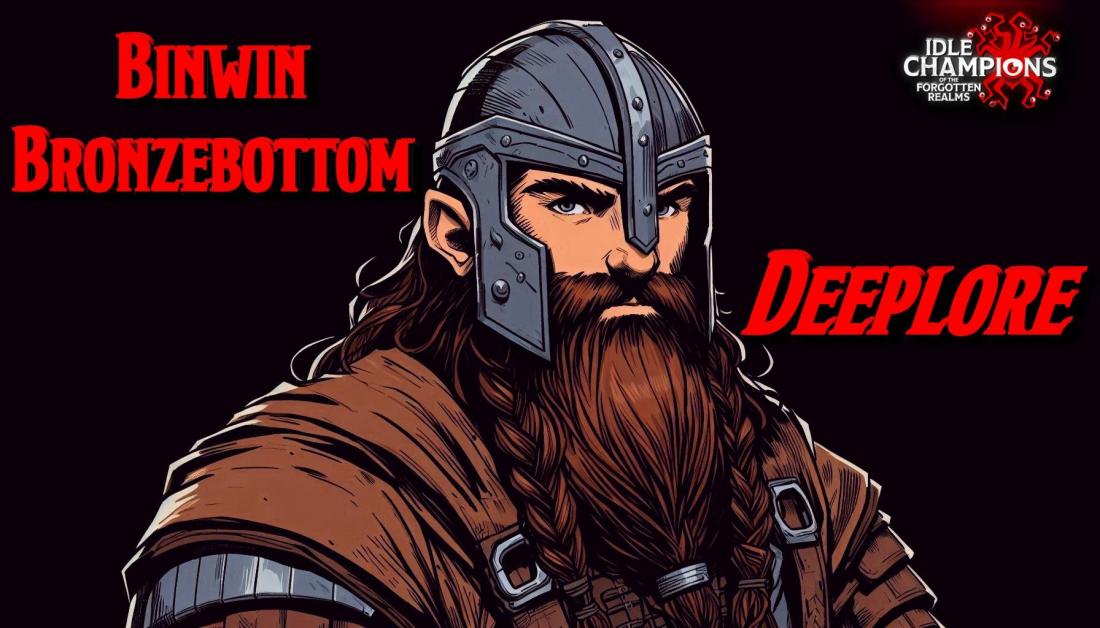
        D&D Deeplore: Binwin Bronzebottom – A Most Persistent Dwarf

        Binwin Bronzebottom is not a champion of transformation or spectacle. He is a dwarf defined by continuity – by duty accepted rather than questioned, by persistence rather than ambition. This Deeplore looks at Binwin not through mechanics or performance, but through his cultural and narrative foundations within the Forgotten Realms, and at how Idle Champions reframes him as a quiet, almost archival presence among its roster.

        Binwin Bronzebottom is not a hero who dominates stories.
        He is a character who survives them.

        In the deep halls of dwarven strongholds, names are forged the same way as steel – slowly, deliberately, and only remembered if they endure. Binwin’s name exists in those records, carved cleanly, without ornament. Not because it was unworthy, but because it was ordinary. And in dwarven culture, ordinary is not an insult. It is a statement of belonging.

        Binwin was born among stone and tradition, in a society that values continuity over ambition. He was not marked by prophecy. He did not inherit a legendary weapon, nor was he groomed for command. He was simply a dwarf who learned to stand his ground, to swing an axe properly, and to survive the pressures of a world that expects you to justify your place in it.

        That expectation is where Binwin’s story truly begins.

        Among dwarves, worth is measured in contribution. What you build. What you defend. What you endure. Binwin did not excel at creation. He was no master smith, no architect of grand halls. His path led outward instead, toward conflict, toward the necessity of violence that every dwarven hold eventually faces.

        Binwin became a warrior not because he sought glory, but because someone had to be there when the tunnels were breached.
        And there is something quietly telling about that.

        In many Dungeons & Dragons stories, dwarven warriors are larger-than-life figures – unbreakable shields, roaring berserkers, avatars of ancestral fury. Binwin is not that. He is competent. Determined. Focused. But never mythic. He fights not to be remembered, but because retreat would mean failure, and failure is unacceptable.
        This makes him dangerous in a very specific way.

        Binwin’s defining trait is not strength, but persistence. He does not overwhelm foes through singular acts of heroism. He wears them down. He presses forward. He finishes what others have already weakened. In party dynamics, that makes him reliable. In stories, it makes him invisible. And yet, invisibility is not the same as irrelevance.

        Binwin’s background places him in a long tradition of dwarves who serve as the quiet backbone of their people’s survival. He is the soldier who holds the line while someone else earns the song. The axe that swings when the horn has already sounded too many times. The dwarf who remains standing when the hall is half-ruined and the survivors are already counting losses. There is a kind of tragedy in that role, even if dwarves themselves would never name it as such.
        Because dwarves do not lament duty. They accept it.

        To understand Binwin properly, you have to understand dwarves. Not as caricatures of stubbornness and ale, but as a people shaped by permanence.
        Dwarves do not see the world as something to conquer or reshape. They see it as something that already exists, something that must be endured, maintained, and occasionally defended with brutal finality. Stone does not negotiate. Time does not apologise. And dwarven culture reflects this with almost uncomfortable clarity.

        Where humans build for generations, dwarves build for centuries. Where others chase legacy, dwarves assume it. You are not meant to become exceptional – you are meant to be worthy of those who came before you. Individual greatness is tolerated, even admired, but it is never the goal. The goal is continuity. The hall must stand. The clan must persist. The name must not be disgraced.
        This worldview leaves little room for personal reinvention.

        A dwarf is expected to become more of what they already are, not something else. Change is not growth; it is risk. And risk is only acceptable when necessity demands it. This is why dwarven heroes often feel emotionally restrained in D&D lore. Their drama is not internal conflict, but external pressure.
        Binwin fits perfectly into this tradition.

        He does not struggle with identity. He does not question his place. His life is not a search, but an assignment. When danger comes, he answers. When enemies press in, he holds. When the fighting is done, he does not expect thanks.
        This makes him psychologically stable, but narratively quiet.

        Dwarves do not frame this as sacrifice. They frame it as normalcy. To complain would be to imply that duty is unfair – and that is a thought dwarven culture simply does not entertain. Stone is not fair. It is just there.

        Binwin’s demeanor, his lack of flourish, his almost transactional relationship with violence, all stem from this cultural bedrock. He is not emotionally distant because he is damaged. He is emotionally contained because excess serves no purpose.

        In mixed adventuring parties, this often places dwarves like Binwin in an odd position. They are dependable, but rarely inspirational. Trusted, but seldom followed. Others dream. Dwarves execute.

        And when the adventure ends, when the tale concludes and the party disperses, dwarves are the ones most likely to return home unchanged. Not because nothing happened, but because what happened did not alter who they were meant to be.
        This is the quiet weight Binwin carries.

        He is not unfinished. He is complete in a way that resists narrative escalation. A dwarf shaped by stone does not arc – he settles.

        Seen through that lens, Binwin is not a failed hero, nor an outdated character. He is a reminder that fantasy worlds are not populated solely by protagonists. They are sustained by those who never needed to be one.

        And in a setting like the Forgotten Realms, that matters more than most stories admit.

        Binwin’s relationship to battle is practical, almost clinical. He does not fight for ideals, nor does he romanticise combat. Enemies are obstacles. They must fall. One after another. There is no joy in it, but there is satisfaction in efficiency. This mindset reflects a worldview shaped by centuries of siege warfare and underground survival, where hesitation is more dangerous than brutality.
        In that sense, Binwin is not merely a character – he is an echo of dwarven history itself.

        When Binwin eventually leaves the safety of dwarven halls and joins wider adventures, he does so without illusion. The surface world is chaotic, illogical, and fragile. Alliances are temporary. Promises are flexible. For a dwarf raised on stone and oath, this is deeply unsettling. And yet, Binwin adapts.
        Not because he enjoys it, but because adaptation is survival.

        In mixed parties, Binwin often finds himself surrounded by louder personalities. Spellcasters with grand theories. Heroes driven by destiny. Characters who speak of balance, prophecy, or redemption. Binwin listens. He rarely interrupts. And when the time comes, he steps forward and does what must be done.
        There is no poetry in that. Only outcome.

        This makes him an awkward fit for narratives that crave transformation. Binwin does not grow into something else. He does not discover a hidden destiny. He does not reconcile inner contradictions, because he has very few. His identity is stable, almost stubbornly so.

        For storytelling, that is both a limitation and a strength.
        Because Binwin represents something rarely centered in fantasy: the idea that not everyone changes, and that this, too, has value.

        In the context of Idle Champions of the Forgotten Realms, Binwin’s presence feels almost archival. A character from an earlier era of design, when champions were often straightforward translations of tabletop concepts rather than narrative focal points. His inclusion is less about spotlight and more about completeness – a nod to the broader tapestry of the Forgotten Realms.

        Although Binwin is often portrayed as a deliberately humorous, almost slapstick figure in Acquisitions Incorporated, Idle Champions presents a markedly different version of him. Here, the comedy is stripped away. What remains is a lawful good dwarven frontline fighter – disciplined, dependable, and almost archetypal. This shift undeniably flattens his personality, but it does not erase his foundations. The jokes disappear, the exaggeration fades, but the cultural core remains intact. In this more serious interpretation, Binwin ceases to function as a parody of dwarven tropes and instead becomes an example of them. Less distinctive, perhaps – but also more representative.

        He is there because the world would feel less honest without him.
        And that honesty is important.

        Binwin reminds us that not every character exists to excite. Some exist to ground. To remind us that worlds are built not only by legends, but by those who never become them.

        For new players encountering Binwin for the first time, this can be quietly refreshing. He does not demand emotional investment. He does not promise greatness. He simply exists, fully formed, unapologetically limited.

        And for older players, Binwin is a mirror of how the game itself has changed. A reminder of where Idle Champions began – simpler, rougher, less concerned with spectacle.

        This is why Binwin remains interesting, even when he is not relevant.
        His story is not about ascent. It is about continuity.

        The rework will change his mechanics, and that will be worth discussing later. But it will not change who Binwin is at his core. He will remain a dwarf shaped by stone, duty, and repetition. A warrior who measures success not in moments, but in what still stands when the dust settles.

        And perhaps that is why Binwin deserves a Deeplore.

        Not because he shines.
        But because he endures.

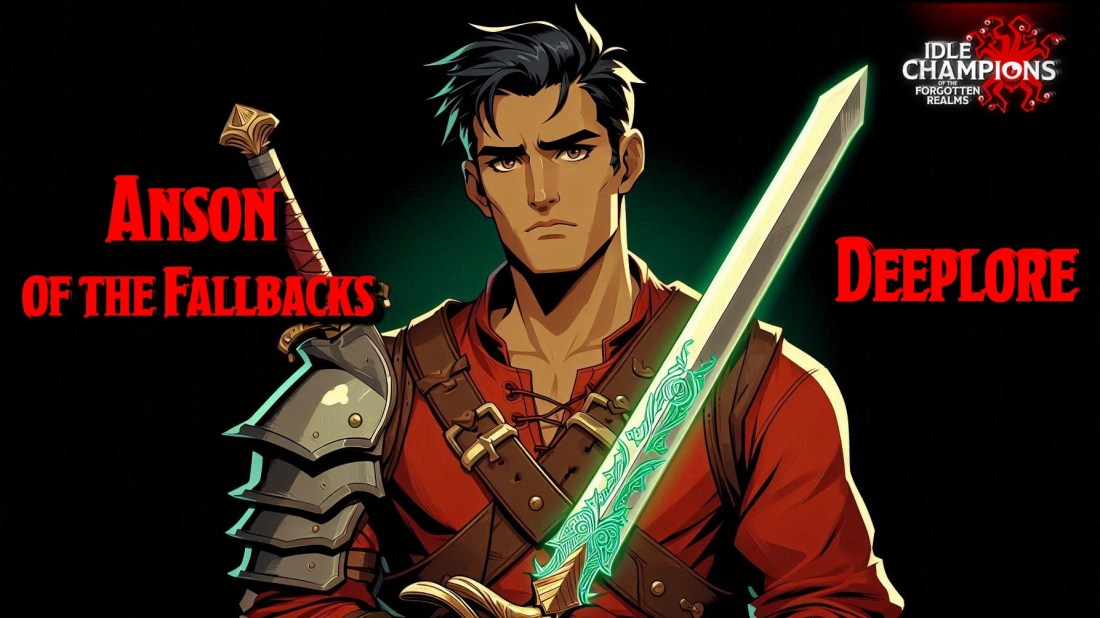
        D&D Deeplore: Anson – A Reluctant Hero


        People often say Anson sees things early. What they don’t mention is that he sometimes speaks too soon. There’s a particular silence that follows when he points out a problem no one else has noticed yet – a silence that feels less like gratitude and more like the room quietly wishing he had waited. That tension clings to him, even when he’s right. Especially when he’s right.

        Where He Comes From

        Anson’s home was small, unremarkable, and perpetually on the edge of something – not disaster, not prosperity, just the slow, grinding uncertainty that makes every decision feel heavier than it should. The dangers there weren’t dramatic. They were cumulative. A bad harvest. A broken tool. A promise made too quickly. Nothing that would ever make it into a bard’s song, but everything that could quietly ruin a family.

        In such a place, you learn to watch. Not because you’re gifted, but because the cost of not watching is immediate. Anson learned to track the small shifts: a neighbor who stopped talking as much, a merchant who changed their route, a storm that arrived half a day earlier than expected. He didn’t think of it as a skill. It was simply how you survived.

        But there’s a side effect to that kind of vigilance. You start seeing patterns everywhere – even when you wish you didn’t. You start anticipating outcomes before anyone else has even realized there’s a choice to be made. And you start carrying the weight of those outcomes long before they happen.

        That weight shaped him more than the place itself.

        Why He Left

        Leaving wasn’t a dramatic moment. No argument, no tragedy, no revelation. Just a slow accumulation of small truths. He realized he wasn’t solving problems anymore – he was delaying them. Holding things together long enough for the collapse to look orderly. And the more he tried to help, the more he felt like he was becoming part of the machinery that kept the place stuck.

        So he left. Quietly. Predictably. Almost mathematically.

        On the road, he didn’t reinvent himself. He didn’t seek adventure. He took work that required reliability, not charisma. He listened more than he spoke. He avoided people who believed too strongly in destiny. He trusted patterns, not promises.

        And then he met the Fallbacks.

        Who the Fallbacks Are

        The Fallbacks are not the first choice for anything. They’re the group you call when your original plan fails, when the obvious heroes are unavailable, uninterested, or already dead. They operate in the aftermath of better ideas.

        What makes them compelling is not their competence – though they have plenty of it – but their honesty. They don’t pretend to be saviors. They don’t chase glory. They solve problems because someone has to, and because they’re willing to accept that the solutions won’t be clean.

        They are improvisers, specialists, pragmatists. People who understand that success often means choosing the least damaging option. People who know that sometimes the best outcome is simply preventing things from getting worse.

        Anson recognized that immediately. It felt familiar.

        How He Joined Them

        The moment Anson became part of the Fallbacks wasn’t marked by heroism. It was marked by a miscalculation – not his, but theirs. A caravan escort job that should have been simple turned complicated fast. The bandits were better organized than expected. The terrain offered fewer advantages than the Fallbacks had assumed. Panic spread through the caravan workers. Arguments broke out among the Fallbacks themselves.

        Anson didn’t take charge. He didn’t shout instructions. He simply pointed out a constraint no one else had accounted for – a detail about timing, terrain, and the bandits’ formation. It wasn’t brilliant. It was just the missing piece that made the rest of the plan coherent.

        The solution that followed wasn’t elegant, but it worked. More importantly, it avoided a cost the others had been willing to pay too easily.

        Afterward, no one asked him to join. They just started talking to him as if he already had.

        His Role Within the Group

        Within the Fallbacks, Anson occupies a strange space. He is not the leader, but his assessments often shape decisions. He doesn’t command, but his silence can stop a plan mid‑stride. He sees patterns forming before others feel their weight, and that makes him both valuable and unsettling.

        He doesn’t believe in clean victories. He believes in survivable outcomes. That distinction matters, because it forces choices no one wants to own. Someone has to decide when to retreat. Someone has to say that a partial success is better than a glorious failure. Anson often becomes that someone – not because he wants to, but because he sees the alternatives too clearly to pretend otherwise.

        But clarity is not the same as certainty.

        His Flaws and Blind Spots

        Anson’s perception is sharp, but not infallible. He reads situations well, but people are not situations. Motives are not patterns. And sometimes his caution becomes hesitation.

        There are moments when decisions are made while he is still calculating the cost. Moments when instinct or conviction pushes the Fallbacks forward while he holds back, convinced the risk is too high. Sometimes he’s right. Sometimes he’s wrong. The difference is rarely obvious in the moment.

        What isolates him is not being wrong – it’s knowing he might be. He carries responsibility like a reflex, even when no one asks him to. When a plan fails after he warned against it, he feels the weight of having seen it and not stopped it. When a plan succeeds by ignoring his caution, he wonders whether his entire worldview – built on restraint and risk management – is narrower than he wants to admit.

        He doesn’t talk about this. He just adjusts, quietly, as if recalibrating himself.

        Why He Stays

        Despite the discomfort, despite the uncertainty, Anson stays with the Fallbacks. Not because he believes in destiny or heroism, but because he recognizes something rare: a group that understands its own limitations. The Fallbacks don’t pretend to be more than they are. They don’t hide their doubts. They don’t chase illusions of perfection.

        They operate in the cracks of the world – the same cracks Anson has lived in his entire life.

        He stays because leaving again would mean abandoning not a collapsing settlement, but a group that functions precisely because it acknowledges the cost of every choice.

        Why He Matters

        Anson is not the hero who changes the world. He is the one who prevents it from unraveling a little faster than it otherwise would. His strength is not dramatic, and his flaws are not theatrical. He is compelling because he embodies a kind of heroism that rarely gets celebrated: the quiet, persistent effort to keep things from getting worse.

        But if you asked him whether that’s enough, he wouldn’t answer. Not because he’s evasive, but because he genuinely doesn’t know.

        Maybe this is the only way he knows how to exist in the world.
        Maybe this is the only place where his way of seeing things isn’t a burden.
        Or maybe – and this thought lingers longer than he likes – he stays because he has no idea what he would become if he stopped watching for the next small thing that might go wrong.

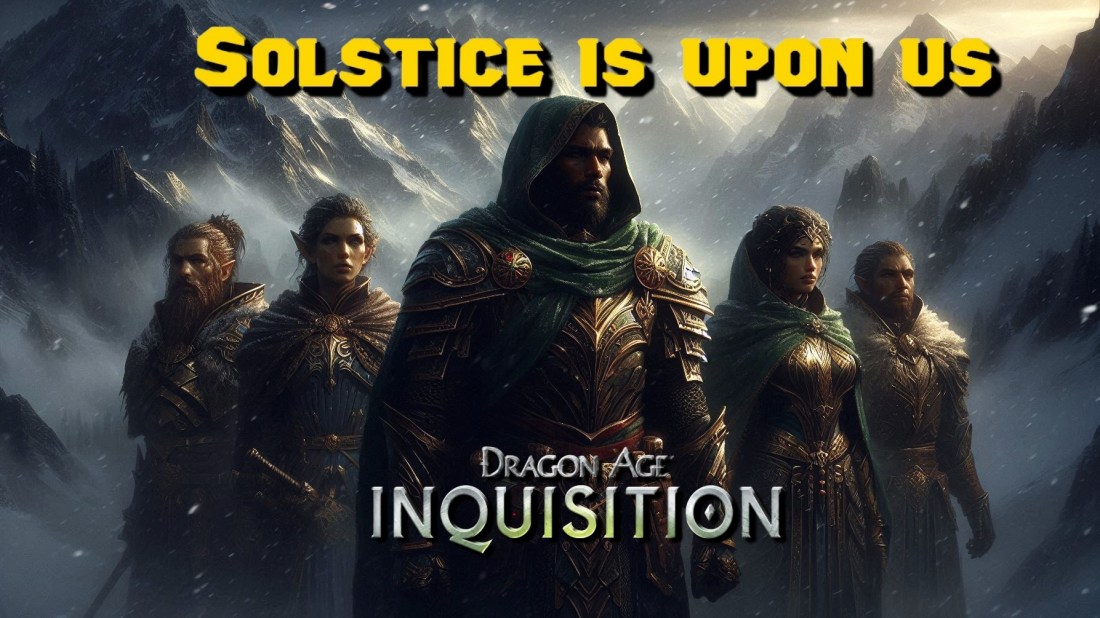
        Winter Solstice in Thedas

        The shortest day, the longest night – and the most unwelcoming moment imaginable to be cast into a new world.

        Dragon Age: Inquisition does not begin with hope, but with chaos, guilt and the cold. An explosion, a prison, suspicious glances – and the quiet question of why this one figure survived at all. This Christmas special is not a return in any comfortable sense, but a slow re-entry into a world that was never meant to feel welcoming.

        The video allows itself time – for first steps, for atmosphere, for dialogue, and for the unspoken weight of its beginning. No rush, no year in review, no ‘best of’. Just a quiet walk through snow, doubt, and the earliest moments of an Inquisition that does not yet understand what it is becoming.

        If Christmas exists here, it does so not as comfort, but as contrast.

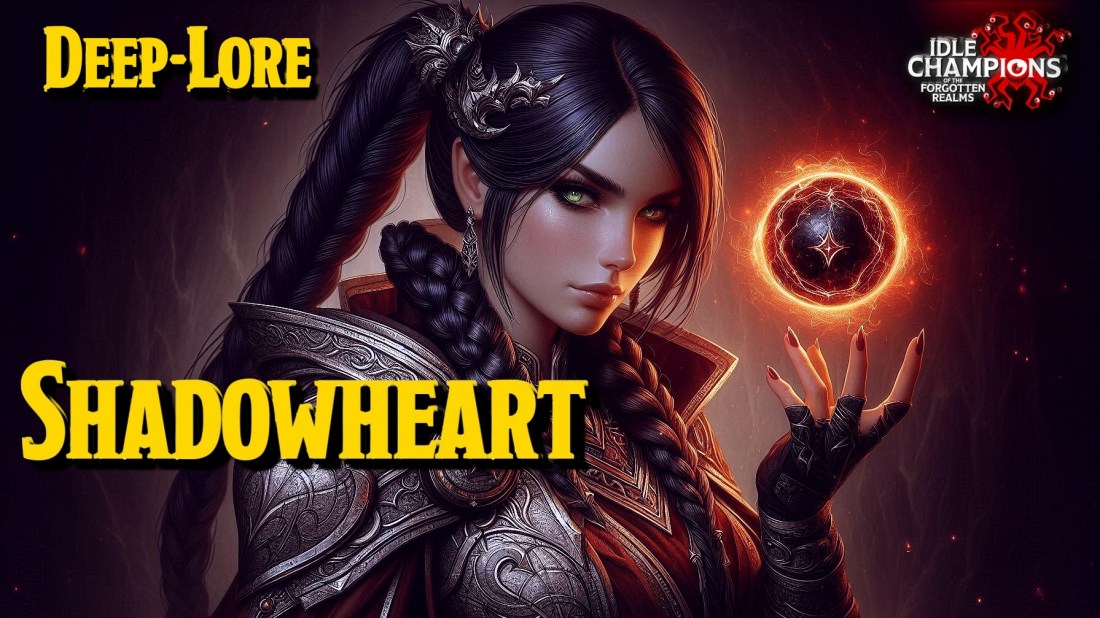
        D&D Deeplore: Shadowheart – Memories remain in the Shadow

        Shadowheart is a character built on contradictions. She moves through the world as if she’s always halfway in shadow, halfway out of reach, and that is very much by design. Her past is hidden, her loyalties are layered, and even when she speaks plainly, there’s always the sense that something remains behind a locked door. To understand her, you have to accept that she is a puzzle that doesn’t want to be solved too quickly. And that is the charm. Not perfection, not heroism, but a person trying to reconcile the fragments of a life she didn’t choose.

        She begins as a cleric of Shar, the Mistress of the Night, a goddess who thrives on secrecy, loss, and the erasure of emotion. Shar doesn’t ask for devotion; she demands it. In her service, memories are tools, pain is discipline, and the self is something to be shaped rather than discovered. Shadowheart was molded through that philosophy. She didn’t grow into her beliefs. She was sculpted into them.

        Her earliest history is hidden even from herself. Not metaphorically, but literally. Her memories were sealed away by her own order, her identity carefully rewritten to protect a mission she was trained to carry out without hesitation. She was not meant to question her past. She was meant to obey, to serve Shar’s will without pause, and to keep her secrets even from herself. And that is important, because it means she begins her journey with an artificial certainty. A certainty built on missing pieces.

        She belongs to the Sharran sect known as the Daughterhood of Shar, an elite circle of devoted initiates. Their goal is simple and cold: carry out the goddess’s hidden work, manipulate events from the darkness, and ensure that Shar’s interests are woven into the world like black thread through fabric. Shadowheart was one of their chosen. Not by birth, but by selection, indoctrination, and design.

        At the start of her story, she carries an artifact meant to be delivered into the hands of her goddess. Her entire identity revolves around this mission. She trusts her faith. She trusts her order. She trusts Shar. That doesn’t make her blind; it makes her shaped. And that distinction defines her far more than her spell list ever could.

        Her loyalties are complex. On the surface, she is loyal to Shar. Underneath, there is tension. You see it in her reactions to kindness, in the way she flinches at comfort, in the awkwardness that comes when she receives genuine care. A Sharran is taught to let go of attachment. Shadowheart wants attachment, even when she tells herself otherwise. She appreciates competence, confidence, and patience in others. She values calm and steadiness. But she struggles when those same qualities are directed at her, as if they shine too brightly on places she has been taught to hide.

        She is embedded in an unusual group of companions, each with their own obsessions and scars. What binds her to them is necessity at first, but gradually something closer to trust. It is slow, often painfully so, and riddled with conflict. She expects betrayal far more than she expects loyalty. Not because she’s unkind, but because she was raised to imagine the world as a place where all bonds eventually snap. And so she tests others without meaning to. She pushes them away when she wants them close. Her loyalty, once earned, becomes steady and resilient, but reaching that point requires navigating walls she doesn’t always realize she built.

        She values subtlety. She dislikes reckless heroics. She respects intention more than bravado. And she despises zealotry, which is ironic, given her upbringing. But Shadowheart’s personal weakness mirrors her greatest strength: she is torn between the person she was made into and the person she might want to become. That conflict gives her depth and unpredictability. It also gives her flaws.

        Shadowheart can be guarded to the point of frustration. She withholds information long past the point where trust would have been reasonable. She can become defensive when challenged, brisk when confronted, and occasionally brittle when her beliefs are questioned. This doesn’t stem from arrogance but from fear. Her identity is built on carefully arranged pieces. If one of them is pulled out, she risks the whole structure collapsing. She defends her doubts by pretending she has none.

        At the same time, she is capable of quiet compassion. Not the loud, heroic kind, but small gestures, often indirect ones. She softens when she sees others suffer in ways she recognizes. She reacts strongly to cruelty, even when she tries to hide it. Her emotional distance is a mask she tries to maintain, not one she actually wants. And the longer she travels with companions who treat her as a person rather than a vessel of Shar’s will, the more cracks appear in that mask. She doesn’t always like what those cracks reveal, but she can’t ignore them.

        Her greatest strength is her ability to change. Not quickly, not easily, and not always gracefully. But genuinely. Few characters manage to stand in the tension between indoctrination and independence without simply flipping to one side. Shadowheart lives in that tension, and she wrestles with it. Her arc is not the story of someone who discovers their true self; it is the story of someone who actively constructs it, piece by piece, choice by choice, even when every instinct tells her to cling to the old shadows.

        Her weaknesses are tied to that same struggle. She is suspicious. She is slow to trust. She hides behind duty when emotion becomes too uncomfortable. She sometimes mistakes silence for strength. She occasionally confuses obedience with purpose. But those flaws are honest flaws. They are not melodramatic, not exaggerated. They are the kind of flaws that feel lived-in.

        Shadowheart’s identity is not static. Her loyalties can evolve. The truth of her past, once uncovered, adds weight rather than clarity. She learns who she was before Shar reshaped her, and that knowledge forces her to confront everything she has been taught. She must choose which memories to honor and which ones to release. And this choice is not just philosophical. It changes her behavior, her beliefs, and even her abilities. She is a character built around the question: who am I when both versions of myself claim to be the truth?

        She is not a saint and not a villain. She is thoughtful, flawed, defensive, vulnerable, and surprisingly brave when it matters. Her story is full of internal echoes: things she lost, things she regained, and things she must let go of to grow. She is not defined by Shar. She is not defined by the fragments of her past. She is defined by the uncomfortable, difficult, persistent work of choosing whom she wants to be next.

        That’s why she resonates with players. Not because she’s powerful. Not because she’s mysterious. But because she embodies something very human: the struggle to move from a version of yourself that feels safe into a version that feels true. And she does it slowly, imperfectly, sometimes painfully, but always sincerely.

        Shadowheart is not a heroine carved in marble. She’s someone trying to walk forward while pulling her shadow behind her. And that makes her memorable in a way polished, flawless characters never are.

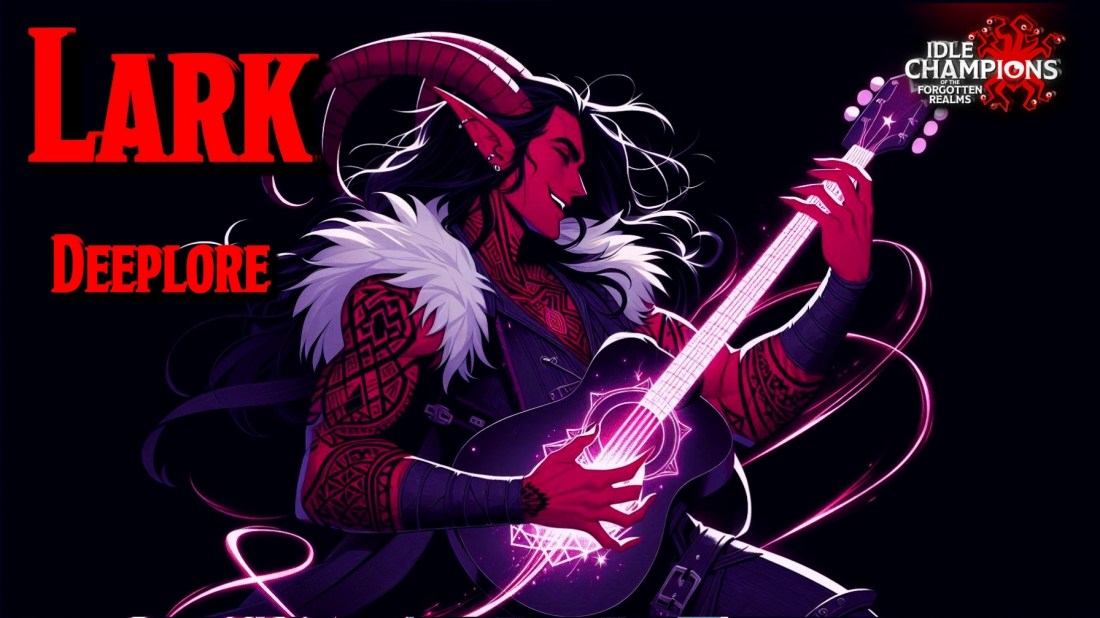
        D&D Deeplore: Lark – The Show Behind the Smile

        Welcome back to the Dystopian Inn, weary traveler. Tonight’s tale is about Lark – a Tiefling bard who walks the razor’s edge between spotlight and shadow. A wanderer with a voice like velvet and a past full of broken chords, he survives by wit, charm, and the hush before applause. In every tavern he enters, danger follows… yet so does the music.

        Lights rise on a lonely, dimly lit tavern deep in a crooked port-town harbour. The smoky air is thick with the scent of salt and spilled ale. Flickering torchlight dances across tired faces and weather-worn beams. And then the door creaks – a figure enters. He moves with measured confidence, a slight tilt in his head, lips curved in a wry half-smile. A Tiefling, eyes glinting with secrets, a lute strapped behind his back, a crossbow slung casually at his side. This is Lark.

        Lark is not a hero. He is a performer. A survivor. At 29 years, chaotic in alignment, he carries the scars of a past he refuses to show. He left his old band of traveling minstrels under cover of darkness – no fanfare, no announcement, no trace. Rumors whisper: jealousy among fellow bards. A betrayal. Or perhaps horrors better left unspoken. Whatever the truth, he vanished. His laughter, once bright and loud, was muted; his songs became whispers in the night. But the hunger for applause, for a spotlight, never died.

        He wandered alone, footsteps echoing in empty inns and silent streets. Then one night, chance or fate brought him to a ragged group calling themselves the Fallbacks. Rough around the edges, perhaps – but strong. Fierce. Loyal. For a man such as Lark, hunted by phantom enemies he will not name, the Fallbacks offered protection. A shield against the shadows that trailed him. He expected simple security. Instead, he found belonging – a fractured family bound by necessity rather than blood. And, as uncertain and fragile as it is, he clings to it.

        Because even in the deepest darkness, light draws eyes. Lark rediscovered the power of his voice. Not just music now, but survival. He learned that words can wound sharper than steel. That a well-placed insult fractures courage. That a melody can stir hope – or despair. He became a bard once more, but not as he had been. This time, with purpose.

        The world can be cruel to Tieflings with tongues sharper than gunshots. Lark knows that better than most. His reputation grew slowly – whispers in taverns, hushed chatter among patrons, glances filled with equal parts awe and suspicion. He courted attention, but never safety. Standing in the light means the shadows gather. Every cheer is a reminder: someone watches. Someone waits for him to slip.

        And slip he almost did, more than once. He favors words over weapons, but he did not forsake arms. At his side rests a small crossbow – “Last Resort”, he calls it. A name heavy with resignation and threat. When mockery fails, when the laughter dies down and foes draw close, Last Resort speaks in silence and death. But Lark rarely draws it. His art is subtler, more insidious. A flick of the tongue, a mocking refrain, a whispered promise – then retreat into darkness before eyes widen in fear or pain.

        He has learned to keep moving. Never stay in one place long after the performance ends. The applause fades quickly; the danger remains. Sometimes he vanishes at dawn, footprints lost in alleyways. Sometimes he sneaks away during a city’s night watch, slipping into crowds. The Fallbacks help – flank him, shield him, watch his back. But only he knows the fear when silence follows laughter. Only he knows the echo of footsteps that are not his own.

        In the heart of the Fallbacks he found more than protection. He found purpose. A reason to keep singing. Because the show must go on. And sometimes, the show is the only shield you have. He learned to use his art like armor, his songs like weapons. And the city’s sordid taverns became stages for survival. For survival with style.

        Lark never asks for forgiveness. He does not beg for understanding. He demands attention, for in that fleeting moment beneath candlelight, within the hush before the first strum, he is seen. Alive. Dangerous. Unconquered.

        There are nights when he stares at the strings of his lute, fingers hovering as if expecting ghosts to answer. He wonders how many he left behind. How many enemies wait for him in the crowd. Sometimes he hears whispers – not from enemies, but from memory. A soft voice of regret. A sharper one of guilt. But he silences them. With a tune. A joke. A drink… or a bolt from Last Resort.

        Lark does not believe in redemption. Not for him. Not yet. He believes in survival. In escape. In the next performance, the next laugh, the next hush before applause. Because every stage reset is a promise to himself: I survived another night. I outran them. I remain free.

        His eyes flick toward the horizon, toward the next tavern, the next crowd, the next set of ears to charm. He walks that tightrope between light and shadow – and loves the danger. Not because he seeks glory, but because he respects truth: the world owes him nothing. The world will spit at Tiefling bards, laugh at songs sung in hellish tongues, and draw cruel knives in gilded halls. Lark accepts that. He thrives on it. Because he knows fear, and fear sharpens performance like a whetstone.

        In the gloom before the crowd gathers, he breathes deep. Fingers find lute strings. His voice – rough, soft, melodic – glides through silence. Just one note. A beginning. The drums of ale mugs. The rustle of cloaks. The shifting breath of strangers. And then the hush. That sacred hush before the first chord rings out.

        And in that hush, Lark feels alive. Every laugh, every sigh, every silence – a pulse in the dark. His audience leans in. His eyes shine. The spotlight warms him like fire. For a moment, he is not a hunted Tiefling. He is not a fugitive. He is not broken. He is something else. Something dangerous. Something unforgettable.

        When the song ends, the applause rises – a wave that threatens to drown him, but also lifts him. He bows. Softly. A mock flourish. Then he vanishes. Into the crowd. Into the night. Into the unknown. Always one step ahead. Always on the run.

        Because for Lark, every farewell is temporary. Every stage a refuge, every performance a lifeline. And every note a promise: so long as he draws breath, he plays. He survives. He endures.

        The show goes on. So must he.

        And somewhere, in the shadows of taverns and nightmares, the hunters wait. But tonight – tonight the only thing that moves is the melody.

        As long as the lute still hums, as long as his lips still smile – Lark remains free.

        Lights fade. Curtain falls. The echoes linger.

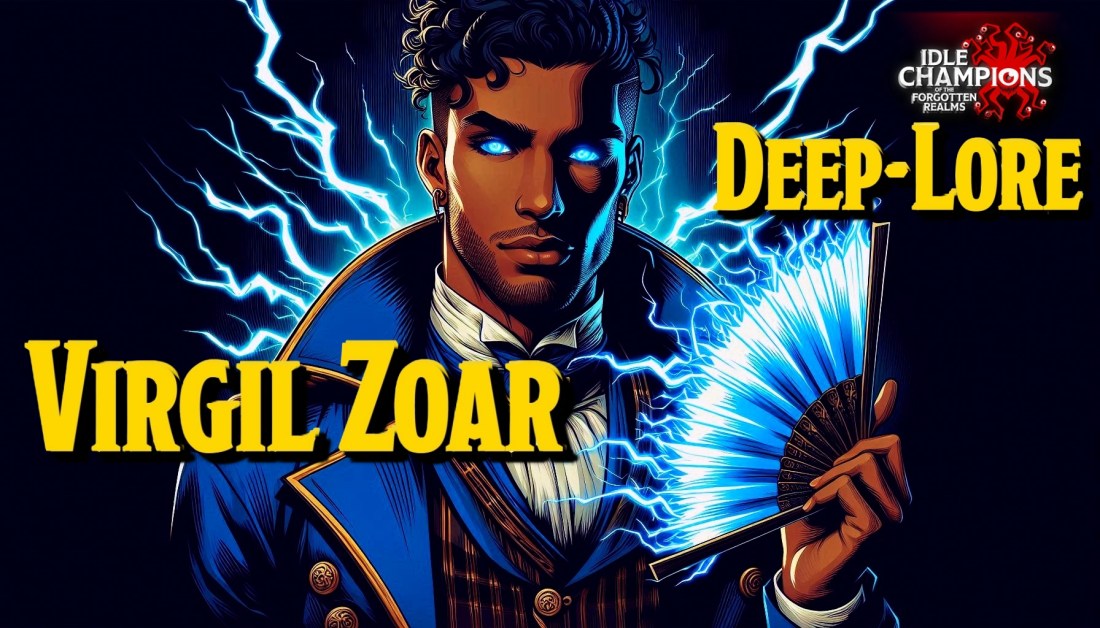
        D&D Deep Lore: Virgil

        Not all storms rage. Some whisper. Some wait. And some wear silk gloves while holding lightning (and a fan). In this Deep Lore, we follow Virgil Zoar – storm sorcerer, Aasimar, and quiet tactician of the Rivals of Waterdeep. Where Kent dances with ghosts, Virgil listens to the wind. Where others seek glory, he seeks equilibrium.

        Born under open skies and shaped by restraint, Virgil is not the hero of tavern songs: he is the pause before thunder. The breath held between grief and grace. And beside him, always, Kent – the spark in the eye of the storm. Together they do not save each other. They simply refuse to let the other vanish. This is not just a story of magic and mechanics. It is a study in patience, in clarity, in the art of holding emotion gently.

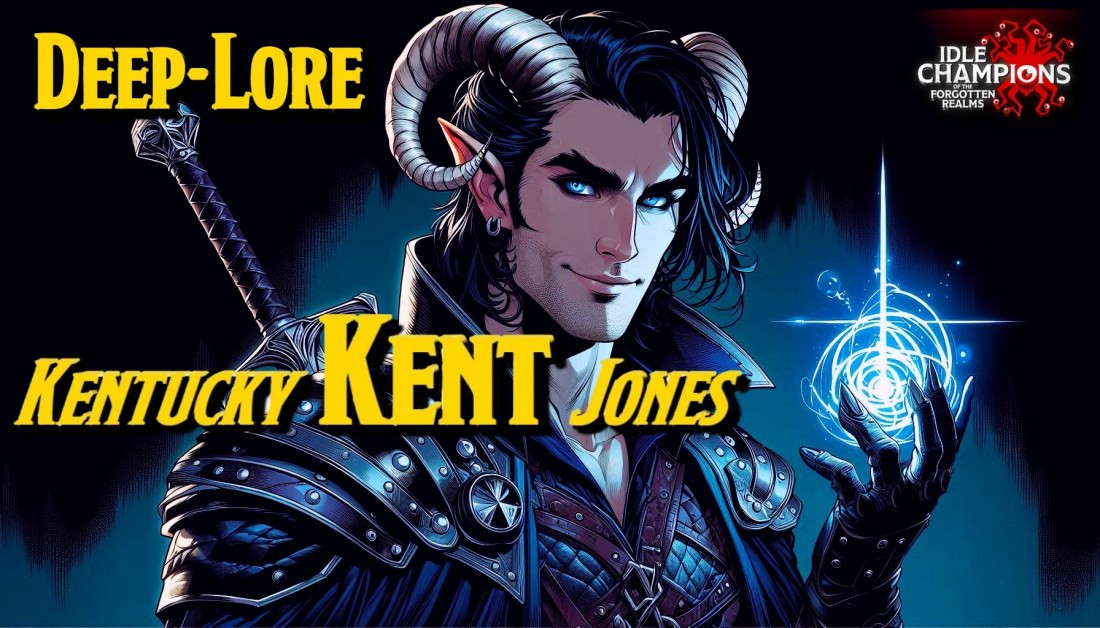
        D&D Deep Lore: Kent

        Welcome back to the Dystopian Inn, traveler. Tonight’s tale is not about glory, nor vengeance, nor destiny. It’s about Kent – a Tiefling rogue, flamboyant scholar, and one of the most quietly tragic figures in Idle Champions of the Forgotten Realms.


        Kentucky “Kent” Jones, archaeologist by passion, survivor by necessity, once chased knowledge into the ruins of Talona’s temple. He emerged alone. His team did not. Caradoon saw a hero. Kent saw ghosts. And he’s been trying to justify his survival ever since.
        This Deep Lore explores the man behind the charm: the sleepless nights, the weight of memory, and the rituals of remembrance that shape his every move. From “Tokens of the Departed” to “Wails from the Grave,” Kent’s abilities aren’t just mechanics – they’re echoes of the past, turned into power.
        And then there’s Virgil. The quiet storm to Kent’s restless flame. Together, they form the Rivals of Waterdeep – not by fate, but by understanding.
        Where Kent burns, Virgil grounds. Where Kent falters, Virgil steadies.

        Kent isn’t a hero. He’s not a villain. He’s a man who made it out when others didn’t. And every joke, every blade flicked with theatrical precision, is his way of remembering differently.

        So when you see Kent in Idle Champions, don’t just see a Rogue with spectral flair. Listen. You might hear the whisper of something older.
        Something human. A scholar’s mind, burdened by ghosts.

        Next time, we follow Virgil into the skies. But for now, settle in. The past deserves to be known.