
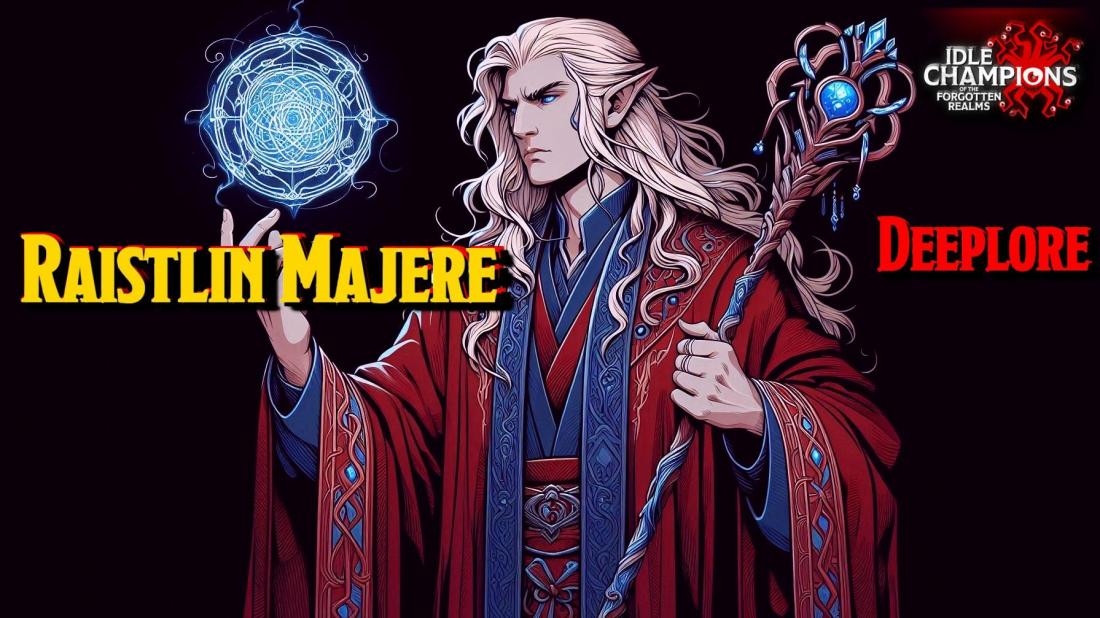
Among the many figures who stride across the history of Krynn, few inspire such fascination and unease as Raistlin Majere. He is neither hero nor simple villain. He is a man shaped by weakness, sharpened by suffering, driven by ambition that borders on the divine. This is the deep lore of Raistlin – the frail child who challenged gods.
Raistlin was born in Solace, among vallenwood trees and suspended homes. He arrived prematurely, small and sickly, barely clinging to life. His twin brother Caramon followed – healthy and strong. From the beginning, Raistlin lived in contrast.
His mother, Rosamun, possessed faint magical sensitivity and unstable prophetic dreams. His father, Gilon, was simple and hardworking. Raistlin inherited neither strength nor warmth, but a mind that refused the limits of his body.
Bullied for his frailty, he could not fight – but he could observe and plan. When he witnessed a traveling mage perform illusions, something crystallized. Magic was the one arena where physical strength meant nothing. His family gathered enough coin to send him to the Academy of Magic in Wayreth, where his true path began.
At Wayreth, his brilliance was undeniable. He mastered arcane theory with precision that impressed even seasoned instructors. Yet talent brought no acceptance. Peers mocked him; masters sensed dangerous ambition.
He learned early that respect would not be granted – it had to be taken. His demeanor hardened. He manipulated when necessary. Not for cruelty’s sake, but because it worked. All of it led to the defining moment of his life: the Test of High Sorcery.
The Test is a crucible designed to push a mage to the brink of death. The Conclave feared Raistlin’s ambition and crafted a harsher trial.
He faced betrayal, temptation, and death. Most infamous was the vision of Caramon as a monstrous brute – the embodiment of strength he lacked. Raistlin chose to kill the illusion. It revealed his ruthlessness and his refusal to be overshadowed again.
He passed – at terrible cost. His health shattered. His skin turned golden, his hair white, his eyes became hourglasses. Through them he saw decay: flowers withering, food rotting, people aging before him. The world revealed itself as entropy.
This was the mark of Fistandantilus, a legendary archmage whose shadow would shape his future. The Test did not merely change him. It defined him.
Raistlin’s weakness was not incidental – it was foundational. Chronic coughing, exhaustion, constant pain. He relied on Caramon for protection.
But weakness forged discipline. He compensated with preparation and precision. He struck first and decisively. His vulnerability became ambition. Where others relied on muscle, Raistlin relied on inevitability.
Their bond is among the most complex in fantasy. Caramon was strong, loyal, kind. Raistlin was sharp, distant, brilliant.
They depended on each other: one guarding the body, the other guiding the mind. Yet resentment festered. Raistlin hated pity. He hated needing protection. He loved his brother – and envied him. That tension fueled his drive for supremacy.
During the War of the Lance, Raistlin joined the Heroes of the Lance. Frail but lethal, he wielded magic with precision and unraveled ancient lore.
After the war, his ascent accelerated. He pursued the secrets of Fistandantilus, mastering forbidden knowledge – and eventually surpassing the archmage himself.
His ambition crystallized into a single goal: to challenge the goddess Takhisis and claim godhood.
His hourglass eyes symbolized his worldview. He saw fragility, decay, and the relentless march of time.
This vision stripped away illusion and comfort. It made him analytical, detached, often cruel. Raistlin did not see the world as it was – he saw how it would end.
He is often labeled evil, yet he is driven less by malice than by purpose.
Power, to him, defines worth. Weakness invites ruin. Destiny must be seized.
He could show compassion or loyalty – but rarely without calculation. Raistlin is neither hero nor villain. He is will made manifest.
His quest for godhood was the natural culmination of his life. He traveled through time, confronted Fistandantilus, and challenged Takhisis herself.
In one timeline, he succeeds. He kills the Queen of Darkness and ascends – only to discover his triumph leaves the world desolate. His victory becomes emptiness.
In that moment, he makes his most unexpected choice. He abandons his ambition and sacrifices himself – not from heroism, but from clarity. He sees the end and refuses to let it stand.
Raistlin endures because he embodies the paradox of power: weak in body, relentless in will; manipulative, yet capable of sacrifice; feared and unforgettable.
He forces us to confront uncomfortable truths about ambition and consequence. Raistlin is not someone you simply admire. He is someone you remember.
Raistlin Majere is ambition sharpened by suffering – a mage who clawed from frailty to near-divinity. A man who saw the world’s decay and sought to master it.
A legend forged not by strength, but by will. Not good. Not evil. Inevitable.
 The Dystopian Inn