D&D Deeplore: Tasslehoff Burrfoot – Chaos That Shouldn’t Work (But Does)


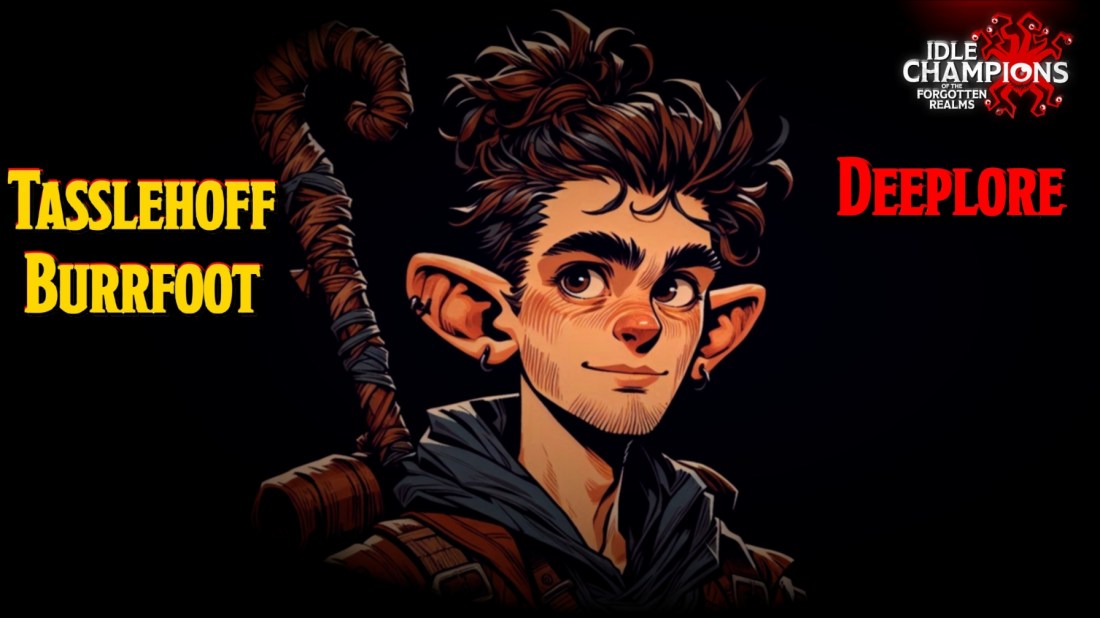
Tasslehoff Burrfoot is one of the strangest success stories in all of Dragonlance. Not because he is powerful or wise, but because he is neither of those things and still manages to shape the world around him. Tasslehoff is a character who should not work, should not survive, should not matter – yet he does. His impact comes from something simple: Tasslehoff does not change the world by changing himself. He changes it by being impossible to ignore.

To understand Tasslehoff, you first have to understand what a kender is. Kender do not feel fear the way other races do. They do not treat danger as a warning. Threats are curiosities. A dragon becomes a creature worth talking to. A locked chest becomes a puzzle. A villain’s lair becomes a sightseeing opportunity. This is not courage. It is a missing instinct. And Tasslehoff Burrfoot embodies that missing instinct more than any other kender.

From the moment he appears, Tasslehoff treats the world like a playground. Traps attract him because they look interesting. Cursed artifacts end up in his hands because they seem lonely. Tense moments collapse because silence makes him restless. The result is not harmless mischief. Plans fall apart. Missions become harder. The group is forced to improvise again and again. Yet the same unpredictability that causes trouble also saves lives. Tasslehoff stumbles into solutions no one else would have found.

His chaos has structure. It exposes the truth about the people around him. Caramon’s protectiveness, Raistlin’s irritation, Flint’s reluctant affection, Tanis’s exhaustion – Tasslehoff brings all of it to the surface. He does not grow in the traditional sense, but he reveals the growth others need. Tasslehoff Burrfoot becomes the emotional stress test of the party. Fragile things break around him. Hidden things come to light. Not because he intends it, but because he cannot imagine a world where secrets stay secret.

Tasslehoff is more than a mirror. He is a contradiction in motion. Compassion drives him, but boundaries mean little to him. His desire to help often complicates situations before it improves them. He cares deeply about people, yet forgets that people can die. Innocence defines him, but that innocence carries risk. This tension gives him weight. He is not a mascot. He is a force that reshapes the story simply by existing.

His pockets say everything about him. They hold a broken buckle, a shiny stone, a key to a door no one remembers, a trinket he picked up because it looked sad. Most of it is useless. Some of it is dangerous. Occasionally, one of these objects becomes exactly what the party needs. Tasslehoff does not collect items. He collects possibilities. And possibilities rarely behave.

His relationships anchor him. Flint Fireforge scolds him constantly, yet watches over him with quiet loyalty. Caramon treats him like a younger brother who needs supervision. Raistlin studies him with a mix of irritation and curiosity. Tanis manages him with the patience of a tired parent. Laurana sees the good in him even when others lose patience. Tasslehoff does not fully understand these dynamics, but he feels them. His loyalty is absolute, even if his attention is not.

Loss touches him as well. Tasslehoff does not become grim or hardened. He does not turn into a darker version of himself. But he feels grief. He carries it differently. Instead of collapsing, he remembers. He talks about the people he has lost. He honors them by continuing to live with the same chaotic curiosity they once found exhausting. His resilience is quiet, but real.

Tasslehoff Burrfoot works because he breaks narrative rules without breaking the narrative. He is unpredictable without being pointless. Innocent without being naive. Chaotic without being destructive for destruction’s sake. He does not need a character arc because he functions as the arc. The world bends around him, reveals itself through him, and becomes more honest in his presence.

That brings us to Idle Champions of the Forgotten Realms. Tasslehoff is not in the game – at least not yet. His appearance is only an educated guess, a possibility circulating through the usual spoiler channels. If he ever joins the roster, he would stand out not because of raw strength, but because of how he interacts with the world.

Any mechanical ideas for him are speculation. But capturing Tasslehoff Burrfoot would require risk. A stolen item might grant a powerful buff after briefly lowering your damage. A rare effect could trivialize a boss or force you to adapt on the spot. A sudden shift in formation might disrupt your plan before rewarding you with a burst of power. These are not predictions. They are possibilities – the kind of unpredictable potential that fits a character who has never behaved predictably.

Tasslehoff Burrfoot is not a hero because he grows. He is a hero because he refuses to stop being himself, even when the world becomes darker than he understands. Chaos with heart. Curiosity with consequences. Innocence with impact. He should not work. Yet he does. And if he ever joins Idle Champions, he will bring exactly that energy with him – helpful, disastrous, and impossible to forget.

D&D Deeplore: Raistlin Majere – The Shadow behind the Hourglass


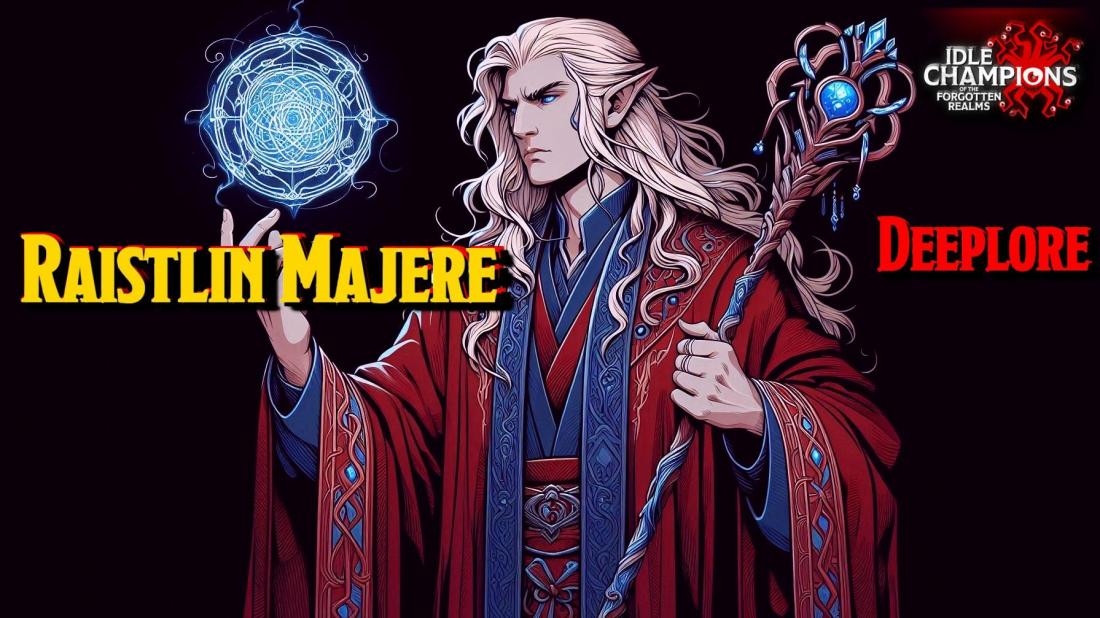
Among the many figures who stride across the history of Krynn, few inspire such fascination and unease as Raistlin Majere. He is neither hero nor simple villain. He is a man shaped by weakness, sharpened by suffering, driven by ambition that borders on the divine. This is the deep lore of Raistlin – the frail child who challenged gods.

Raistlin was born in Solace, among vallenwood trees and suspended homes. He arrived prematurely, small and sickly, barely clinging to life. His twin brother Caramon followed – healthy and strong. From the beginning, Raistlin lived in contrast.

His mother, Rosamun, possessed faint magical sensitivity and unstable prophetic dreams. His father, Gilon, was simple and hardworking. Raistlin inherited neither strength nor warmth, but a mind that refused the limits of his body.

Bullied for his frailty, he could not fight – but he could observe and plan. When he witnessed a traveling mage perform illusions, something crystallized. Magic was the one arena where physical strength meant nothing. His family gathered enough coin to send him to the Academy of Magic in Wayreth, where his true path began.

At Wayreth, his brilliance was undeniable. He mastered arcane theory with precision that impressed even seasoned instructors. Yet talent brought no acceptance. Peers mocked him; masters sensed dangerous ambition.

He learned early that respect would not be granted – it had to be taken. His demeanor hardened. He manipulated when necessary. Not for cruelty’s sake, but because it worked. All of it led to the defining moment of his life: the Test of High Sorcery.

The Test is a crucible designed to push a mage to the brink of death. The Conclave feared Raistlin’s ambition and crafted a harsher trial.

He faced betrayal, temptation, and death. Most infamous was the vision of Caramon as a monstrous brute – the embodiment of strength he lacked. Raistlin chose to kill the illusion. It revealed his ruthlessness and his refusal to be overshadowed again.

He passed – at terrible cost. His health shattered. His skin turned golden, his hair white, his eyes became hourglasses. Through them he saw decay: flowers withering, food rotting, people aging before him. The world revealed itself as entropy.

This was the mark of Fistandantilus, a legendary archmage whose shadow would shape his future. The Test did not merely change him. It defined him.

Raistlin’s weakness was not incidental – it was foundational. Chronic coughing, exhaustion, constant pain. He relied on Caramon for protection.

But weakness forged discipline. He compensated with preparation and precision. He struck first and decisively. His vulnerability became ambition. Where others relied on muscle, Raistlin relied on inevitability.

Their bond is among the most complex in fantasy. Caramon was strong, loyal, kind. Raistlin was sharp, distant, brilliant.

They depended on each other: one guarding the body, the other guiding the mind. Yet resentment festered. Raistlin hated pity. He hated needing protection. He loved his brother – and envied him. That tension fueled his drive for supremacy.

During the War of the Lance, Raistlin joined the Heroes of the Lance. Frail but lethal, he wielded magic with precision and unraveled ancient lore.

After the war, his ascent accelerated. He pursued the secrets of Fistandantilus, mastering forbidden knowledge – and eventually surpassing the archmage himself.

His ambition crystallized into a single goal: to challenge the goddess Takhisis and claim godhood.

His hourglass eyes symbolized his worldview. He saw fragility, decay, and the relentless march of time.

This vision stripped away illusion and comfort. It made him analytical, detached, often cruel. Raistlin did not see the world as it was – he saw how it would end.

He is often labeled evil, yet he is driven less by malice than by purpose.

Power, to him, defines worth. Weakness invites ruin. Destiny must be seized.

He could show compassion or loyalty – but rarely without calculation. Raistlin is neither hero nor villain. He is will made manifest.

His quest for godhood was the natural culmination of his life. He traveled through time, confronted Fistandantilus, and challenged Takhisis herself.

In one timeline, he succeeds. He kills the Queen of Darkness and ascends – only to discover his triumph leaves the world desolate. His victory becomes emptiness.

In that moment, he makes his most unexpected choice. He abandons his ambition and sacrifices himself – not from heroism, but from clarity. He sees the end and refuses to let it stand.

Raistlin endures because he embodies the paradox of power: weak in body, relentless in will; manipulative, yet capable of sacrifice; feared and unforgettable.

He forces us to confront uncomfortable truths about ambition and consequence. Raistlin is not someone you simply admire. He is someone you remember.

Raistlin Majere is ambition sharpened by suffering – a mage who clawed from frailty to near-divinity. A man who saw the world’s decay and sought to master it.

A legend forged not by strength, but by will. Not good. Not evil. Inevitable.

D&D Deeplore: Fen – The Art of Survival


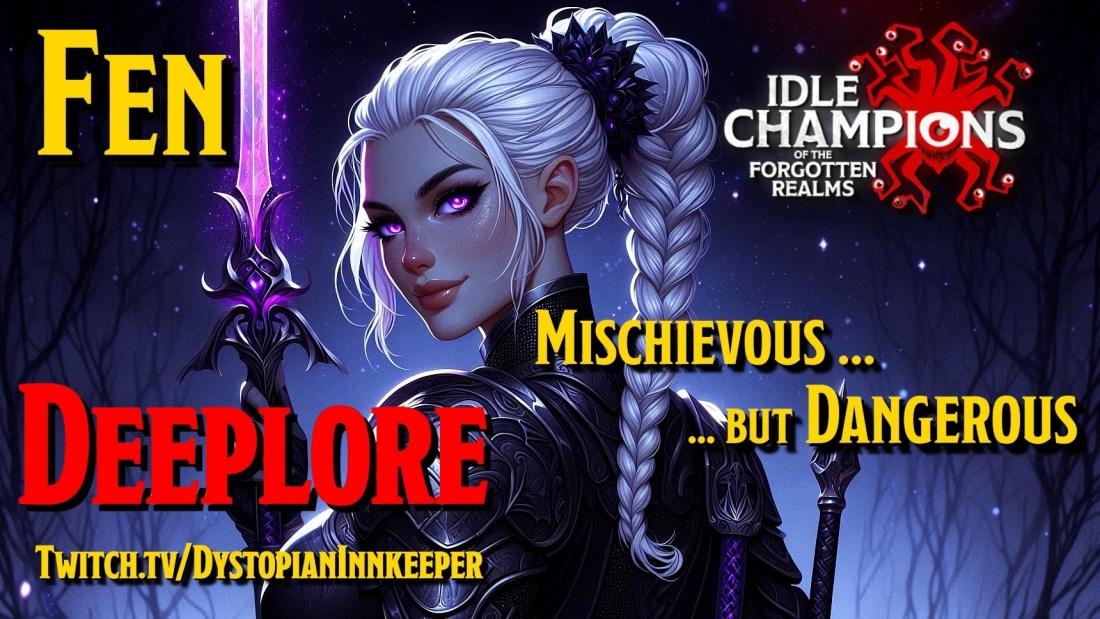
Fen is a Wildhunt Shifter, and that already tells you more about her than any dramatic backstory could. Shifters grow up learning to read the world before it reads them. They learn who to trust, who to avoid, and when to move on. Fen didn’t become cautious because something terrible happened to her. She became cautious because she paid attention.

he isn’t fearless. She isn’t unbreakable. She isn’t the kind of person who walks into danger because she believes she’s meant to. Fen walks into danger because she’s done it before and survived it often enough to know she probably can again. Not always. Just often enough.

She trusts her instincts, even though they’re not perfect. Sometimes she reads a threat too early, sometimes too late. But she adjusts. She learns. She doesn’t pretend to be right all the time. She just tries to be right when it matters.

Fen’s strength isn’t that she’s hardened. It’s that she’s experienced. And experience, for her, means knowing the difference between fear and danger, and acting anyway.

How Fen found the Black Dice Society

    Fen didn’t join the Black Dice Society because she was looking for a family. She joined them because she recognized something familiar: people who had been pushed into the same kind of darkness she knew how to navigate.

    Nahara, Desmond, Valentine, Tatiana, Brother Uriah — none of them are simple. None of them are stable. None of them are safe. But they’re honest about their damage, and that’s something Fen respects more than heroism.

    She supports them the way she knows how: quietly, steadily, without asking for anything in return. And the more of them stand beside her, the more she gives back. Not because she becomes sentimental, but because she understands that survival is easier when the people around you understand what it costs.

    Fen doesn’t fix the Black Dice Society. She doesn’t guide them. She doesn’t protect them. She stands with them. And for someone like Fen, that’s the closest thing to loyalty she ever promises.

    Fen and the Patrons

      Fen’s connection to the Patrons isn’t mystical or emotional. It’s practical. She understands power — not in the abstract, but in the way someone understands a storm. You don’t negotiate with it. You don’t admire it. You don’t fear it. You read it, and you act accordingly.

      Mirt is easy for her. He’s a survivor, and survivors recognize each other. He doesn’t pretend to be noble, and Fen doesn’t pretend to be impressed. They understand each other without needing to like each other.

      Vajra is different. Controlled, disciplined, sharp. Fen doesn’t trust her, but she respects her. Vajra values competence, and Fen delivers competence without excuses. Their relationship is professional, and that’s enough.

      Zariel is dangerous, but predictable. Devils follow rules, and Fen likes rules when they’re written clearly. She would never sell her soul, but she knows how to work with someone who expects strength and rewards clarity. Zariel doesn’t intimidate her. She just requires attention.

      Elminster is the odd one out. He’s powerful without being oppressive, wise without being condescending. Fen doesn’t underestimate him, but she doesn’t overthink him either. He treats her like a person, and she returns the favor.

      And then there’s Strahd.

      Fen doesn’t hate Strahd. She doesn’t fear him. She doesn’t admire him. She recognizes him. She’s met men like him before — not as ancient, not as theatrical, but built on the same foundation: obsession mistaken for love, tragedy mistaken for depth, control mistaken for destiny.

      Fen gives Strahd exactly the amount of attention that keeps her alive. No more. No less. She knows he’s dangerous, but she also knows he isn’t unique. That’s what keeps her steady around him. Not defiance. Not bravado. Just experience.

      Strahd doesn’t accept Fen because he values her. He accepts her because Nahara matters to him, and Fen matters to Nahara. Fen understands that. She doesn’t take it personally. She doesn’t take it as a compliment. She takes it as a fact.

      What comes next for Fen and the Black Dice Society?

        The Black Dice Society is a story full of unfinished business. Fen’s future is tied to theirs, not because she needs them, but because she chooses them. She stays with them for the same reason she joined them: they make sense to her in a way the rest of the world rarely does.

        Fen will never be the strongest Champion in Idle Champions. She will never be the flashiest, the most dramatic, or the most optimized. But she will almost always be good. She fits into more formations than she doesn’t. She works with more Patrons than she doesn’t. And she remains useful even when the meta shifts around her.

        When Strahd enters the picture — through Nahara, through the BDS, through the Domains of Dread — Fen doesn’t change. She doesn’t rise to challenge him. She doesn’t shrink from him. She simply continues doing what she always does: reading the situation, choosing her moment, and surviving it.

        Fen isn’t the hero of the story. She isn’t the villain. She isn’t the chosen one or the cursed one. She’s the one who keeps going. The one who adapts. The one who doesn’t pretend to be more than she is.

        And in a world full of people who think they’re destined for greatness, someone who simply endures can be the most interesting figure of all.

        Fen won’t save the world. But she’ll still be here when the people who try are gone.