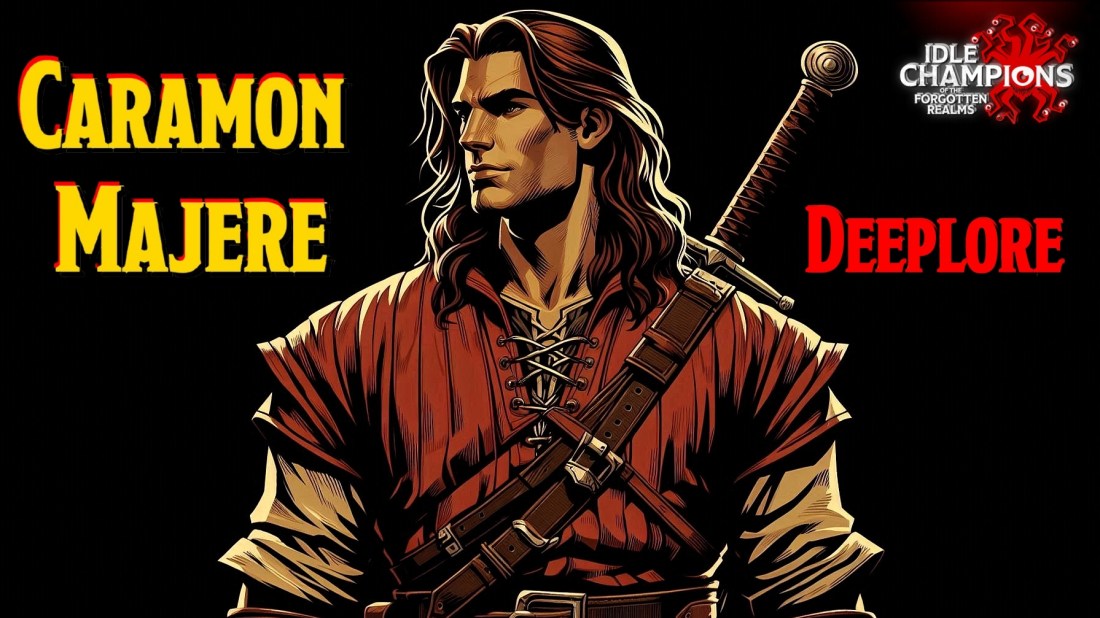
D&D Deeplore: Caramon Majere – He Had Nothing Without Him

Will Caramon Majere ever step out of Raistlin’s shadow? Explore the tragic and powerful lore of Dragonlance’s most famous warrior and why his story is about so much more than just physical strength.

Caramon Majere is often introduced as the strong brother, the one who could lift what others dropped and stand where others faltered. But that description hides more than it reveals. Caramon’s strength was real, yet it covered a deep uncertainty he carried from childhood into adulthood. His life was shaped by a bond that gave him purpose, but also trapped him. And when that bond shifted, he lost his footing so completely that he nearly vanished inside his own despair. His story is not a tale of steady courage. It is the story of a man who had to rebuild himself after discovering that the foundation he relied on was never stable.

He was born in Solace, moments after Raistlin. The midwife fought to keep Raistlin alive. Caramon arrived without trouble. That contrast became the lens through which he saw the world. Raistlin struggled to breathe. Caramon didn’t. Raistlin’s body failed him again and again. Caramon’s felt like a shield he was expected to use. And because of that, Caramon grew up believing that his strength existed for one purpose: to carry the weight his brother couldn’t bear.

As a child, he stepped in front of blows meant for Raistlin. He dragged him out of fights Raistlin had provoked. He took the blame for things Raistlin had done. He didn’t resent it. He didn’t even think about it. Protecting Raistlin felt as natural as breathing. But that instinct came with a cost. Caramon never learned who he was outside that role. He never asked himself what he wanted. He never imagined a future that didn’t revolve around his brother’s needs.

He grew into a large, capable young man. He trained with weapons and found comfort in the clarity of combat. Swing, block, step, strike. No riddles. No hidden motives. Just movement and consequence. People liked him. He was easy to trust. He laughed often and loudly. But beneath that warmth lived a fear he never voiced. Caramon worried that without someone to protect, he would be useless. He worried that strength alone made him valuable, and that if he ever failed in that role, he would have nothing left.

Raistlin’s growing power made that fear worse. Caramon admired his brother’s mind, but he also felt the sting of Raistlin’s sharpness. Raistlin did not hide his frustration with Caramon’s simplicity. He did not hide his resentment of Caramon’s physical gifts. And he certainly did not hide his belief that Caramon’s loyalty was a chain he had never asked for. Caramon absorbed all of it. He told himself it didn’t matter. He told himself Raistlin needed him, even if Raistlin refused to admit it. But the truth was harder: Caramon needed Raistlin far more than Raistlin needed him.

During the War of the Lance, Caramon fought with determination. He held the line when others faltered. He protected companions who would not have survived without him. He was not a strategist, but he had instincts that saved lives. He was not a scholar, but he understood people in ways that mattered. Yet even in the middle of war, he felt himself slipping into the background. Raistlin’s reputation grew quickly. His magic became feared. His ambition sharpened. And Caramon, for the first time, began to feel like a tool rather than a partner. He was the arm that swung the blade, not the mind that shaped the plan. Useful, yes. But replaceable.

After the war, that imbalance finally broke him. Raistlin left to pursue his own path, and Caramon found himself without direction. Without his brother to protect, he drifted. His discipline vanished. His confidence collapsed. He drank heavily. He slept poorly. He pushed away the people who cared about him. He became a burden to Tika, who loved him but could not carry him. Caramon had always been the strong one, but now he couldn’t even hold himself upright. He had spent his entire life building his identity around someone else, and when that person stepped away, he had nothing left.

This period is often softened in retellings, but the truth is harsher. Caramon was not a tragic hero in these years. He was difficult to be around. He was angry without reason. He was ashamed of his weakness but did nothing to change it. He blamed himself for Raistlin’s departure, then blamed Raistlin for leaving, then blamed the world for not giving him a place. He spiraled, and he dragged others down with him. It was not noble suffering. It was the collapse of a man who had never learned to stand on his own.

Tika Waylan refused to let him disappear. She confronted him when others stayed silent. She challenged him when he tried to hide behind excuses. She did not coddle him. She did not soothe him. She demanded that he stop using his brother as an explanation for every failure. Her love was not gentle. It was sharp, impatient, and necessary. She forced him to see that strength meant nothing if he used it only to avoid responsibility. And for the first time, Caramon had to face the possibility that he had been hiding behind his role as protector, not fulfilling it.

The turning point came when he was forced to confront Raistlin’s plan to ascend to godhood. Caramon did not rise to this challenge with confidence. He stumbled into it. He resisted it. He doubted himself constantly. But he had no choice. The world needed someone who understood Raistlin’s mind, someone who could reach him, someone who could stand in his way if necessary. Caramon did not feel ready. He did not feel worthy. But he went anyway.

This journey did not transform him overnight. He did not suddenly regain discipline. He did not suddenly find clarity. He struggled every step of the way. He trained because he had to, not because he wanted to. He rebuilt his body slowly, painfully, with setbacks that nearly broke him again. But he kept going. Not out of heroism, but out of stubbornness and fear of what would happen if he didn’t.

When he finally confronted Raistlin, it was not a clash of equals. It was a meeting of two men who had spent their entire lives misunderstanding each other. Caramon did not defeat Raistlin through strength. He reached him through a mixture of anger, grief, and a kind of honesty he had never dared to show before. He showed Raistlin a future shaped by unchecked ambition, a future where Raistlin stood alone in a dead world. And in that moment, Caramon became something he had never been before: the one who guided Raistlin, instead of the one who followed him.

After Raistlin’s final sacrifice, Caramon’s life changed again. But this time, the change was slow and grounded. He married Tika, not as a broken man seeking rescue, but as someone finally willing to build a life with another person. He became a father and discovered a kind of purpose that did not depend on being a shield. He learned to live for himself, not as an extension of his brother, but as a man with his own hopes and flaws and responsibilities.

Caramon’s story endures because it is not clean. It is not a steady rise. It is a series of collapses and recoveries. He is not the perfect warrior or the flawless protector. He is a man who spent years lost in someone else’s shadow, who fell apart when that shadow vanished, and who slowly, painfully, learned to stand in the light on his own.

Caramon Majere is not defined by strength. He is defined by the struggle to understand what strength actually means. He is not the shadow of Raistlin. He is the proof that even the mightiest warrior must learn who he is when the sword is lowered and the world grows quiet. His journey is not about power or destiny. It is about identity. And that makes him one of the most human figures in all of Krynn.
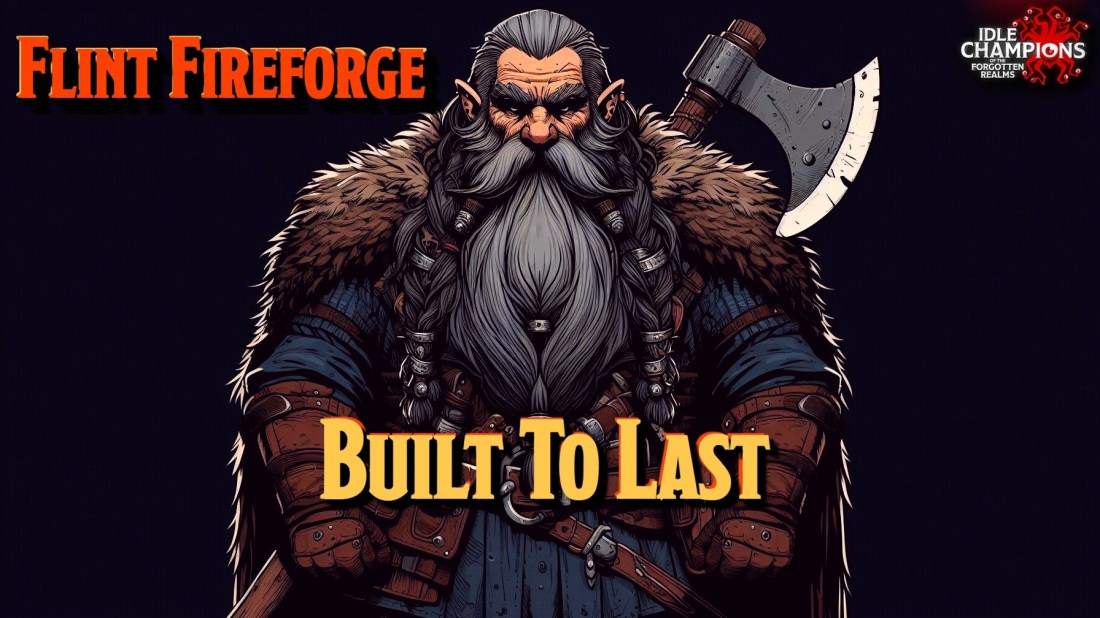
D&D Deeplore: Flint Fireforge – The Heart of the Lance


Flint Fireforge is one of Dragonlance’s most quietly enduring figures – a dwarf whose presence shapes the emotional landscape of the Companions not through grand gestures, but through steadfast loyalty, grounded wisdom, and the stubborn dignity of a craftsman who has seen the world change faster than he ever wished it to.

His story is not one of prophecy or divine calling. It is the story of a dwarf who chose his own family, carried his age with both pride and fear, and stood firm when others faltered.

Flint’s origins lie among the hill dwarves, yet he never fully embraced the insularity of dwarven tradition. He respected the craft, the discipline, and the heritage of his people, but he did not let those traditions confine him. Solace became his home – not by accident, but by choice. His forge there was more than a workplace; it was a sanctuary where he shaped metal with the same care he applied to shaping his life. Flint’s craftsmanship is central to his identity, and it reflects his worldview: the belief that things should be built to last, that effort matters, and that the world is held together by those who repair what others break.

It is in Solace that Flint’s life intersects with Tanis Half‑Elven, a young child found wandering alone in the forest. Flint takes him in, teaches him the discipline of metalwork, and offers him a place where he belongs. Their relationship is never explicitly labeled in the canon, but many readers interpret it as a father‑son bond – or at least the closest thing Flint ever has to one. Their connection is built on shared work and quiet understanding rather than overt sentiment. Tanis’s struggle with identity resonates with Flint’s own sense of displacement, and the dwarf’s protective instincts toward him reveal a vulnerability Flint rarely shows to others.

If Tanis represents Flint’s grounded, paternal side, Tasslehoff Burrfoot represents the opposite: chaos, curiosity, and the unpredictable joy of life. Flint’s exasperation with Tas is one of Dragonlance’s most recognizable dynamics. Tas steals his belongings, drags him into trouble, and tests his patience at every turn. Yet beneath the grumbling lies genuine affection. Flint’s protectiveness toward Tas is unmistakable, even if he hides it behind complaints. Their friendship becomes one of the emotional anchors of the saga, culminating in Flint’s quiet death on the slopes of Mount Nevermind – a moment witnessed only by Tas, whose grief underscores how deeply the dwarf had shaped his life.

Flint’s age is one of the most important themes of his arc. For a dwarf, he is not extraordinarily old – merely in the later stages of a long life. But Flint feels his age more keenly than many of his kin. His joints ache, his breath shortens, and he worries that he cannot keep pace with the younger Companions. This fear is psychological as much as physical. Flint is not terrified of death; he is terrified of becoming irrelevant, of failing those he loves, of being left behind. His awareness of his own mortality gives his journey a quiet poignancy that contrasts with the grand destinies of others.

Flint’s role in the Companions’ adventures is often understated, yet consistently meaningful. At Xak Tsaroth, he stands alongside Tanis, Sturm, Goldmoon, and the others as they confront the first great revelations of the War of the Lance. His practical caution tempers the group’s impulsiveness, and his grounded perspective helps them navigate the ruins without succumbing to fear or confusion. At Pax Tharkas, Flint’s reliability becomes essential. He is not the one who rallies armies or negotiates alliances, but he is the one who keeps the group moving, who repairs what breaks, who steadies those who falter.

His involvement in the search for the Disks of Mishakal further illustrates his importance. Flint is not driven by religious fervor or prophetic destiny, yet he recognizes the significance of the quest. His loyalty to his friends – especially Tanis – keeps him committed even when the path grows dangerous. Flint’s courage is quiet, but it is unwavering.

Not all of Flint’s contributions are solemn. His deep and abiding hatred of boats is one of Dragonlance’s most enduring sources of humor. Flint despises water travel with a passion that borders on mythic. He becomes seasick at the slightest motion, complains loudly, and blames boats for every misfortune. His aversion to flying devices is equally intense. When confronted with gnomish inventions – especially those of Mount Nevermind – Flint’s patience evaporates entirely. His distrust of gnomish engineering is not unfounded, and his reactions provide levity in moments of tension. These quirks are not mere comedic relief; they reveal Flint’s desire for stability in a world that increasingly defies his expectations.

Flint’s relationships with the other Companions deepen this portrait. He respects Sturm Brightblade’s honor, though he occasionally bristles at Sturm’s rigidity. With Caramon Majere, Flint finds a kindred spirit in practicality and good nature. Raistlin, however, evokes caution. Flint senses the mage’s ambition and secrecy, and while he rarely confronts him directly, his instincts are often correct. Goldmoon and Riverwind inspire in Flint a quiet respect. Their dignity and devotion reinforce his belief that the world is larger than Solace, larger than dwarven tradition, larger even than his own fears. Laurana’s transformation from sheltered princess to hardened leader is something Flint observes with a mixture of pride and protective concern. Her growth mirrors Tanis’s struggles, and Flint feels both admiration and worry as she steps into a role that demands sacrifice and steel.

Flint’s journey embodies several of Dragonlance’s central themes. He represents the dignity of ordinary heroism – the idea that one does not need prophecy or divine favor to shape the world. His arc is a meditation on aging, on the fear of becoming irrelevant, and on the courage required to face one’s own limits. His relationships illustrate the power of found family, the bonds forged not by blood but by choice. And his craftsmanship symbolizes the act of shaping one’s own destiny, one careful strike at a time.

His death is one of the saga’s most poignant moments precisely because it is quiet. Flint does not fall in battle or perish in a blaze of glory. He dies of the simple limits of his mortal body, sitting beside a friend who loves him. It is a passing that reflects his life: humble, honest, and deeply felt. Tas’s grief becomes the echo of Flint’s legacy – a reminder that even the smallest forge can shape the fate of the world.

Flint never slew the greatest dragon, never wielded divine power, and never sought glory. Yet whenever the Companions needed reminding of home, of friendship, and of the ordinary lives worth protecting, it was often Flint who provided that anchor. Even in the darkest moments, Flint rarely abandoned his habit of complaining – perhaps because grumbling was simply another way of caring.
His legacy is not one of legend, but of loyalty – and perhaps that is why it endures.

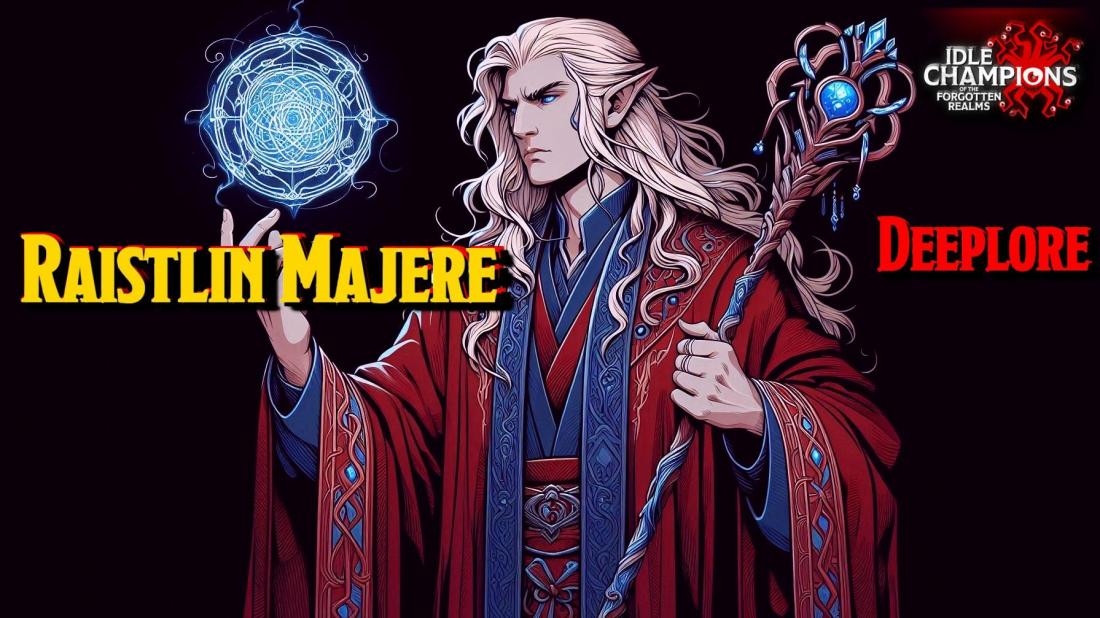
D&D Deeplore: Raistlin Majere – The Shadow behind the Hourglass


Among the many figures who stride across the history of Krynn, few inspire such fascination and unease as Raistlin Majere. He is neither hero nor simple villain. He is a man shaped by weakness, sharpened by suffering, driven by ambition that borders on the divine. This is the deep lore of Raistlin – the frail child who challenged gods.

Raistlin was born in Solace, among vallenwood trees and suspended homes. He arrived prematurely, small and sickly, barely clinging to life. His twin brother Caramon followed – healthy and strong. From the beginning, Raistlin lived in contrast.

His mother, Rosamun, possessed faint magical sensitivity and unstable prophetic dreams. His father, Gilon, was simple and hardworking. Raistlin inherited neither strength nor warmth, but a mind that refused the limits of his body.

Bullied for his frailty, he could not fight – but he could observe and plan. When he witnessed a traveling mage perform illusions, something crystallized. Magic was the one arena where physical strength meant nothing. His family gathered enough coin to send him to the Academy of Magic in Wayreth, where his true path began.

At Wayreth, his brilliance was undeniable. He mastered arcane theory with precision that impressed even seasoned instructors. Yet talent brought no acceptance. Peers mocked him; masters sensed dangerous ambition.

He learned early that respect would not be granted – it had to be taken. His demeanor hardened. He manipulated when necessary. Not for cruelty’s sake, but because it worked. All of it led to the defining moment of his life: the Test of High Sorcery.

The Test is a crucible designed to push a mage to the brink of death. The Conclave feared Raistlin’s ambition and crafted a harsher trial.

He faced betrayal, temptation, and death. Most infamous was the vision of Caramon as a monstrous brute – the embodiment of strength he lacked. Raistlin chose to kill the illusion. It revealed his ruthlessness and his refusal to be overshadowed again.

He passed – at terrible cost. His health shattered. His skin turned golden, his hair white, his eyes became hourglasses. Through them he saw decay: flowers withering, food rotting, people aging before him. The world revealed itself as entropy.

This was the mark of Fistandantilus, a legendary archmage whose shadow would shape his future. The Test did not merely change him. It defined him.

Raistlin’s weakness was not incidental – it was foundational. Chronic coughing, exhaustion, constant pain. He relied on Caramon for protection.

But weakness forged discipline. He compensated with preparation and precision. He struck first and decisively. His vulnerability became ambition. Where others relied on muscle, Raistlin relied on inevitability.

Their bond is among the most complex in fantasy. Caramon was strong, loyal, kind. Raistlin was sharp, distant, brilliant.

They depended on each other: one guarding the body, the other guiding the mind. Yet resentment festered. Raistlin hated pity. He hated needing protection. He loved his brother – and envied him. That tension fueled his drive for supremacy.

During the War of the Lance, Raistlin joined the Heroes of the Lance. Frail but lethal, he wielded magic with precision and unraveled ancient lore.

After the war, his ascent accelerated. He pursued the secrets of Fistandantilus, mastering forbidden knowledge – and eventually surpassing the archmage himself.

His ambition crystallized into a single goal: to challenge the goddess Takhisis and claim godhood.

His hourglass eyes symbolized his worldview. He saw fragility, decay, and the relentless march of time.

This vision stripped away illusion and comfort. It made him analytical, detached, often cruel. Raistlin did not see the world as it was – he saw how it would end.

He is often labeled evil, yet he is driven less by malice than by purpose.

Power, to him, defines worth. Weakness invites ruin. Destiny must be seized.

He could show compassion or loyalty – but rarely without calculation. Raistlin is neither hero nor villain. He is will made manifest.

His quest for godhood was the natural culmination of his life. He traveled through time, confronted Fistandantilus, and challenged Takhisis herself.

In one timeline, he succeeds. He kills the Queen of Darkness and ascends – only to discover his triumph leaves the world desolate. His victory becomes emptiness.

In that moment, he makes his most unexpected choice. He abandons his ambition and sacrifices himself – not from heroism, but from clarity. He sees the end and refuses to let it stand.

Raistlin endures because he embodies the paradox of power: weak in body, relentless in will; manipulative, yet capable of sacrifice; feared and unforgettable.

He forces us to confront uncomfortable truths about ambition and consequence. Raistlin is not someone you simply admire. He is someone you remember.

Raistlin Majere is ambition sharpened by suffering – a mage who clawed from frailty to near-divinity. A man who saw the world’s decay and sought to master it.

A legend forged not by strength, but by will. Not good. Not evil. Inevitable.