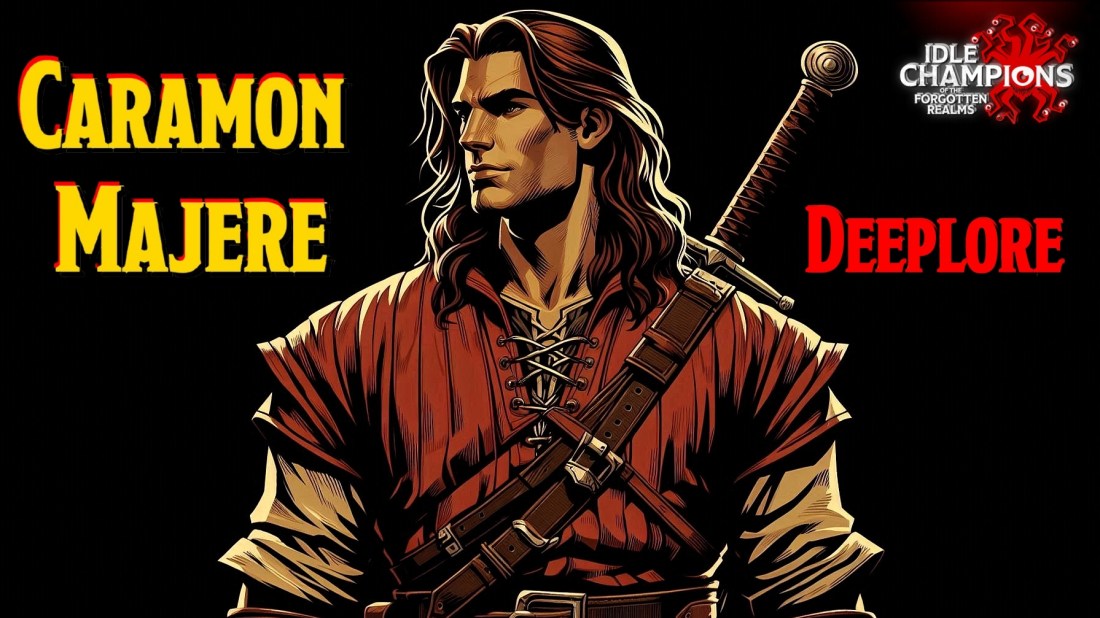
D&D Deeplore: Caramon Majere – He Had Nothing Without Him

Will Caramon Majere ever step out of Raistlin’s shadow? Explore the tragic and powerful lore of Dragonlance’s most famous warrior and why his story is about so much more than just physical strength.

Caramon Majere is often introduced as the strong brother, the one who could lift what others dropped and stand where others faltered. But that description hides more than it reveals. Caramon’s strength was real, yet it covered a deep uncertainty he carried from childhood into adulthood. His life was shaped by a bond that gave him purpose, but also trapped him. And when that bond shifted, he lost his footing so completely that he nearly vanished inside his own despair. His story is not a tale of steady courage. It is the story of a man who had to rebuild himself after discovering that the foundation he relied on was never stable.

He was born in Solace, moments after Raistlin. The midwife fought to keep Raistlin alive. Caramon arrived without trouble. That contrast became the lens through which he saw the world. Raistlin struggled to breathe. Caramon didn’t. Raistlin’s body failed him again and again. Caramon’s felt like a shield he was expected to use. And because of that, Caramon grew up believing that his strength existed for one purpose: to carry the weight his brother couldn’t bear.

As a child, he stepped in front of blows meant for Raistlin. He dragged him out of fights Raistlin had provoked. He took the blame for things Raistlin had done. He didn’t resent it. He didn’t even think about it. Protecting Raistlin felt as natural as breathing. But that instinct came with a cost. Caramon never learned who he was outside that role. He never asked himself what he wanted. He never imagined a future that didn’t revolve around his brother’s needs.

He grew into a large, capable young man. He trained with weapons and found comfort in the clarity of combat. Swing, block, step, strike. No riddles. No hidden motives. Just movement and consequence. People liked him. He was easy to trust. He laughed often and loudly. But beneath that warmth lived a fear he never voiced. Caramon worried that without someone to protect, he would be useless. He worried that strength alone made him valuable, and that if he ever failed in that role, he would have nothing left.

Raistlin’s growing power made that fear worse. Caramon admired his brother’s mind, but he also felt the sting of Raistlin’s sharpness. Raistlin did not hide his frustration with Caramon’s simplicity. He did not hide his resentment of Caramon’s physical gifts. And he certainly did not hide his belief that Caramon’s loyalty was a chain he had never asked for. Caramon absorbed all of it. He told himself it didn’t matter. He told himself Raistlin needed him, even if Raistlin refused to admit it. But the truth was harder: Caramon needed Raistlin far more than Raistlin needed him.

During the War of the Lance, Caramon fought with determination. He held the line when others faltered. He protected companions who would not have survived without him. He was not a strategist, but he had instincts that saved lives. He was not a scholar, but he understood people in ways that mattered. Yet even in the middle of war, he felt himself slipping into the background. Raistlin’s reputation grew quickly. His magic became feared. His ambition sharpened. And Caramon, for the first time, began to feel like a tool rather than a partner. He was the arm that swung the blade, not the mind that shaped the plan. Useful, yes. But replaceable.

After the war, that imbalance finally broke him. Raistlin left to pursue his own path, and Caramon found himself without direction. Without his brother to protect, he drifted. His discipline vanished. His confidence collapsed. He drank heavily. He slept poorly. He pushed away the people who cared about him. He became a burden to Tika, who loved him but could not carry him. Caramon had always been the strong one, but now he couldn’t even hold himself upright. He had spent his entire life building his identity around someone else, and when that person stepped away, he had nothing left.

This period is often softened in retellings, but the truth is harsher. Caramon was not a tragic hero in these years. He was difficult to be around. He was angry without reason. He was ashamed of his weakness but did nothing to change it. He blamed himself for Raistlin’s departure, then blamed Raistlin for leaving, then blamed the world for not giving him a place. He spiraled, and he dragged others down with him. It was not noble suffering. It was the collapse of a man who had never learned to stand on his own.

Tika Waylan refused to let him disappear. She confronted him when others stayed silent. She challenged him when he tried to hide behind excuses. She did not coddle him. She did not soothe him. She demanded that he stop using his brother as an explanation for every failure. Her love was not gentle. It was sharp, impatient, and necessary. She forced him to see that strength meant nothing if he used it only to avoid responsibility. And for the first time, Caramon had to face the possibility that he had been hiding behind his role as protector, not fulfilling it.

The turning point came when he was forced to confront Raistlin’s plan to ascend to godhood. Caramon did not rise to this challenge with confidence. He stumbled into it. He resisted it. He doubted himself constantly. But he had no choice. The world needed someone who understood Raistlin’s mind, someone who could reach him, someone who could stand in his way if necessary. Caramon did not feel ready. He did not feel worthy. But he went anyway.

This journey did not transform him overnight. He did not suddenly regain discipline. He did not suddenly find clarity. He struggled every step of the way. He trained because he had to, not because he wanted to. He rebuilt his body slowly, painfully, with setbacks that nearly broke him again. But he kept going. Not out of heroism, but out of stubbornness and fear of what would happen if he didn’t.

When he finally confronted Raistlin, it was not a clash of equals. It was a meeting of two men who had spent their entire lives misunderstanding each other. Caramon did not defeat Raistlin through strength. He reached him through a mixture of anger, grief, and a kind of honesty he had never dared to show before. He showed Raistlin a future shaped by unchecked ambition, a future where Raistlin stood alone in a dead world. And in that moment, Caramon became something he had never been before: the one who guided Raistlin, instead of the one who followed him.

After Raistlin’s final sacrifice, Caramon’s life changed again. But this time, the change was slow and grounded. He married Tika, not as a broken man seeking rescue, but as someone finally willing to build a life with another person. He became a father and discovered a kind of purpose that did not depend on being a shield. He learned to live for himself, not as an extension of his brother, but as a man with his own hopes and flaws and responsibilities.

Caramon’s story endures because it is not clean. It is not a steady rise. It is a series of collapses and recoveries. He is not the perfect warrior or the flawless protector. He is a man who spent years lost in someone else’s shadow, who fell apart when that shadow vanished, and who slowly, painfully, learned to stand in the light on his own.

Caramon Majere is not defined by strength. He is defined by the struggle to understand what strength actually means. He is not the shadow of Raistlin. He is the proof that even the mightiest warrior must learn who he is when the sword is lowered and the world grows quiet. His journey is not about power or destiny. It is about identity. And that makes him one of the most human figures in all of Krynn.
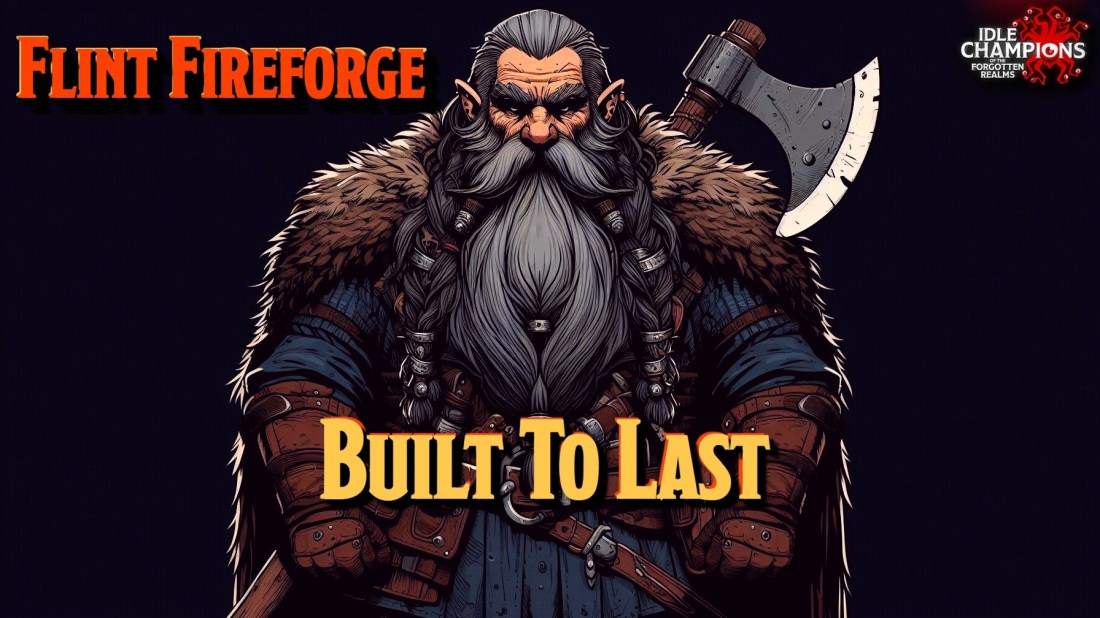
D&D Deeplore: Flint Fireforge – The Heart of the Lance


Flint Fireforge is one of Dragonlance’s most quietly enduring figures – a dwarf whose presence shapes the emotional landscape of the Companions not through grand gestures, but through steadfast loyalty, grounded wisdom, and the stubborn dignity of a craftsman who has seen the world change faster than he ever wished it to.

His story is not one of prophecy or divine calling. It is the story of a dwarf who chose his own family, carried his age with both pride and fear, and stood firm when others faltered.

Flint’s origins lie among the hill dwarves, yet he never fully embraced the insularity of dwarven tradition. He respected the craft, the discipline, and the heritage of his people, but he did not let those traditions confine him. Solace became his home – not by accident, but by choice. His forge there was more than a workplace; it was a sanctuary where he shaped metal with the same care he applied to shaping his life. Flint’s craftsmanship is central to his identity, and it reflects his worldview: the belief that things should be built to last, that effort matters, and that the world is held together by those who repair what others break.

It is in Solace that Flint’s life intersects with Tanis Half‑Elven, a young child found wandering alone in the forest. Flint takes him in, teaches him the discipline of metalwork, and offers him a place where he belongs. Their relationship is never explicitly labeled in the canon, but many readers interpret it as a father‑son bond – or at least the closest thing Flint ever has to one. Their connection is built on shared work and quiet understanding rather than overt sentiment. Tanis’s struggle with identity resonates with Flint’s own sense of displacement, and the dwarf’s protective instincts toward him reveal a vulnerability Flint rarely shows to others.

If Tanis represents Flint’s grounded, paternal side, Tasslehoff Burrfoot represents the opposite: chaos, curiosity, and the unpredictable joy of life. Flint’s exasperation with Tas is one of Dragonlance’s most recognizable dynamics. Tas steals his belongings, drags him into trouble, and tests his patience at every turn. Yet beneath the grumbling lies genuine affection. Flint’s protectiveness toward Tas is unmistakable, even if he hides it behind complaints. Their friendship becomes one of the emotional anchors of the saga, culminating in Flint’s quiet death on the slopes of Mount Nevermind – a moment witnessed only by Tas, whose grief underscores how deeply the dwarf had shaped his life.

Flint’s age is one of the most important themes of his arc. For a dwarf, he is not extraordinarily old – merely in the later stages of a long life. But Flint feels his age more keenly than many of his kin. His joints ache, his breath shortens, and he worries that he cannot keep pace with the younger Companions. This fear is psychological as much as physical. Flint is not terrified of death; he is terrified of becoming irrelevant, of failing those he loves, of being left behind. His awareness of his own mortality gives his journey a quiet poignancy that contrasts with the grand destinies of others.

Flint’s role in the Companions’ adventures is often understated, yet consistently meaningful. At Xak Tsaroth, he stands alongside Tanis, Sturm, Goldmoon, and the others as they confront the first great revelations of the War of the Lance. His practical caution tempers the group’s impulsiveness, and his grounded perspective helps them navigate the ruins without succumbing to fear or confusion. At Pax Tharkas, Flint’s reliability becomes essential. He is not the one who rallies armies or negotiates alliances, but he is the one who keeps the group moving, who repairs what breaks, who steadies those who falter.

His involvement in the search for the Disks of Mishakal further illustrates his importance. Flint is not driven by religious fervor or prophetic destiny, yet he recognizes the significance of the quest. His loyalty to his friends – especially Tanis – keeps him committed even when the path grows dangerous. Flint’s courage is quiet, but it is unwavering.

Not all of Flint’s contributions are solemn. His deep and abiding hatred of boats is one of Dragonlance’s most enduring sources of humor. Flint despises water travel with a passion that borders on mythic. He becomes seasick at the slightest motion, complains loudly, and blames boats for every misfortune. His aversion to flying devices is equally intense. When confronted with gnomish inventions – especially those of Mount Nevermind – Flint’s patience evaporates entirely. His distrust of gnomish engineering is not unfounded, and his reactions provide levity in moments of tension. These quirks are not mere comedic relief; they reveal Flint’s desire for stability in a world that increasingly defies his expectations.

Flint’s relationships with the other Companions deepen this portrait. He respects Sturm Brightblade’s honor, though he occasionally bristles at Sturm’s rigidity. With Caramon Majere, Flint finds a kindred spirit in practicality and good nature. Raistlin, however, evokes caution. Flint senses the mage’s ambition and secrecy, and while he rarely confronts him directly, his instincts are often correct. Goldmoon and Riverwind inspire in Flint a quiet respect. Their dignity and devotion reinforce his belief that the world is larger than Solace, larger than dwarven tradition, larger even than his own fears. Laurana’s transformation from sheltered princess to hardened leader is something Flint observes with a mixture of pride and protective concern. Her growth mirrors Tanis’s struggles, and Flint feels both admiration and worry as she steps into a role that demands sacrifice and steel.

Flint’s journey embodies several of Dragonlance’s central themes. He represents the dignity of ordinary heroism – the idea that one does not need prophecy or divine favor to shape the world. His arc is a meditation on aging, on the fear of becoming irrelevant, and on the courage required to face one’s own limits. His relationships illustrate the power of found family, the bonds forged not by blood but by choice. And his craftsmanship symbolizes the act of shaping one’s own destiny, one careful strike at a time.

His death is one of the saga’s most poignant moments precisely because it is quiet. Flint does not fall in battle or perish in a blaze of glory. He dies of the simple limits of his mortal body, sitting beside a friend who loves him. It is a passing that reflects his life: humble, honest, and deeply felt. Tas’s grief becomes the echo of Flint’s legacy – a reminder that even the smallest forge can shape the fate of the world.

Flint never slew the greatest dragon, never wielded divine power, and never sought glory. Yet whenever the Companions needed reminding of home, of friendship, and of the ordinary lives worth protecting, it was often Flint who provided that anchor. Even in the darkest moments, Flint rarely abandoned his habit of complaining – perhaps because grumbling was simply another way of caring.
His legacy is not one of legend, but of loyalty – and perhaps that is why it endures.

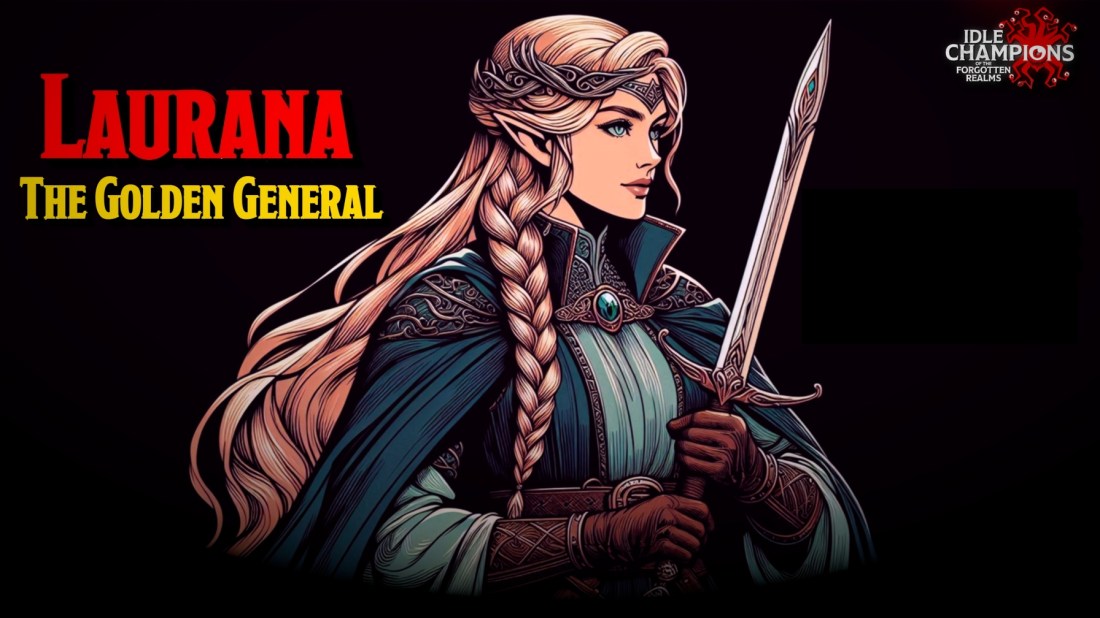
D&D Deeplore: Laurana Kanan – The Golden General of the Lance

Laurana’s story begins in Qualinost, within halls shaped by elven craft, old pride, and expectations older than she was. Her life was never meant to be uncertain. It was meant to be graceful, measured, and quietly obedient to the duties of elven nobility. Her family imagined diplomacy, elegance, and a future arranged long before she had any say in it.

But Laurana was never destined to remain only a daughter of Qualinost.

Beyond the vallenwood, the world was already changing. War was coming – not as a distant rumour, but as a force that would tear through kingdoms, alliances, and every quiet certainty she had been raised to trust. The War of the Dragonlance would demand far more than grace. It would demand leadership, sacrifice, and the courage to become someone no one – perhaps not even Laurana herself – had ever expected.

Her first real confrontation with danger came at Pax Tharkas. Smoke clung to the ceiling. The air tasted like metal. A child grabbed her sleeve and refused to let go. Laurana guided him through the dark while screams echoed behind them. She did not feel brave. She felt responsible.

War does not wait for readiness. It drags people forward whether they understand the cost or not. Laurana moved through those early battles with a clarity she did not recognize as her own. She steadied hands that trembled too much to hold a torch. She whispered instructions to people who had never seen blood before. She watched death up close and understood that the life she once knew could not return.

The turning point arrived without ceremony. A group of soldiers waited for orders. No one stepped forward. Laurana filled the silence. She spoke because the alternative was collapse. The soldiers listened. They followed. Leadership settled on her shoulders like a weight she could not set down again.

She made mistakes. One of them cost lives. During a retreat near the Vingaard River, she misread the enemy’s movement and sent a scouting party into a narrow pass. They never returned. The report reached her at dawn. She folded the parchment once, placed it on the table, and continued issuing orders.

Her capture by Kitiara revealed the depth of her vulnerability. Kitiara understood ambition. She understood desire. She understood the power of fear. Laurana faced a woman who moved through the world with a confidence sharpened by experience. Kitiara spoke to her with a calm that felt like a blade laid flat against the skin. Laurana realized, in a single quiet moment, that Kitiara saw her more clearly than she saw herself. And there was nothing she could do to stop it.

Her escape did not restore her confidence. It reshaped it. Survival demanded attention. And she paid it. She returned to her allies with a new sense of purpose, though the cost of that clarity lingered beneath the surface.

The defense of Palanthas stands as the moment where Laurana became the Golden General. Dragons circled the skies. Armies gathered at the gates. Panic threatened to spread through the ranks. Laurana stepped into the chaos with a steady voice. She positioned troops where they could hold the line. She recognized weaknesses in the enemy’s formation and acted before hesitation could take root.

The battle was brutal. The air filled with the smell of burning wood and collapsing stone. A soldier stumbled toward her with a wound across his chest. He asked if they would survive. She told him yes. He died minutes later. She did not take the word back.

Victory came at a cost. Laurana felt each loss like a stone added to the burden she carried. Every decision shaped the fate of people who looked to her for guidance. She hid her grief behind a calm exterior. She spoke with confidence even when uncertainty gnawed at her.

Her relationship with Tanis changed as the war progressed. The certainty she once felt faded. She saw him through new eyes. She recognized the distance between them. She understood that the person she had been when she left Qualinost no longer existed. The love she carried did not vanish, but it changed. It became quieter. More complicated. Less certain. Growth creates space where closeness once lived.

There were nights when she felt the weight of her transformation more sharply than any wound. After a long march, she realized she no longer remembered the names of the fallen. Only the positions they held. She sat alone by the fire and tried to recall a single face. None came.

The war shaped her identity in ways she could not have predicted. She became a symbol of resilience. A figure who represented hope in the darkest moments. Yet the cost of that transformation remained hidden from most. People saw the Golden General. They did not see the young woman who lay awake at night replaying decisions she could not undo. They did not see the quiet moments where she questioned whether she had become someone she no longer recognized.

Laurana’s tragedy lies not in defeat, but in the price of victory. She gained strength and lost innocence. She gained authority and lost certainty. She gained respect and lost the simplicity of the life she once imagined. She became the Golden General because the world demanded it, not because she sought it.

When the war ended, she did not return to the person she had been. That version of her existed only in memory. She walked through the aftermath with the calm of someone who had seen too much to be comforted by celebration. People thanked her. She nodded. The distance between them remained.

Laurana Kanan endures because her story is not one of triumph alone. It is a story of transformation, sacrifice, and the quiet tragedy of becoming someone the world needs, even when it costs more than anyone realizes. She won battles that shaped the age. And lost the version of herself she once believed was real.


Who is Laurana? Why does she carry that title? And what did it cost her to earn it?
Let’s dive into her Deeplore.

Laurana’s story begins in Qualinost, within halls shaped by elven craft, old pride, and expectations older than she was. Her life was never meant to be uncertain. It was meant to be graceful, measured, and quietly obedient to the duties of elven nobility. Her family imagined diplomacy, elegance, and a future arranged long before she had any say in it.

But Laurana was never destined to remain only a daughter of Qualinost.

Beyond the vallenwood, the world was already changing. War was coming – not as a distant rumour, but as a force that would tear through kingdoms, alliances, and every quiet certainty she had been raised to trust. The War of the Dragonlance would demand far more than grace. It would demand leadership, sacrifice, and the courage to become someone no one – perhaps not even Laurana herself – had ever expected.

Her first real confrontation with danger came at Pax Tharkas. Smoke clung to the ceiling. The air tasted like metal. A child grabbed her sleeve and refused to let go. Laurana guided him through the dark while screams echoed behind them. She did not feel brave. She felt responsible.

War does not wait for readiness. It drags people forward whether they understand the cost or not. Laurana moved through those early battles with a clarity she did not recognize as her own. She steadied hands that trembled too much to hold a torch. She whispered instructions to people who had never seen blood before. She watched death up close and understood that the life she once knew could not return.

The turning point arrived without ceremony. A group of soldiers waited for orders. No one stepped forward. Laurana filled the silence. She spoke because the alternative was collapse. The soldiers listened. They followed. Leadership settled on her shoulders like a weight she could not set down again.

She made mistakes. One of them cost lives. During a retreat near the Vingaard River, she misread the enemy’s movement and sent a scouting party into a narrow pass. They never returned. The report reached her at dawn. She folded the parchment once, placed it on the table, and continued issuing orders.

Her capture by Kitiara revealed the depth of her vulnerability. Kitiara understood ambition. She understood desire. She understood the power of fear. Laurana faced a woman who moved through the world with a confidence sharpened by experience. Kitiara spoke to her with a calm that felt like a blade laid flat against the skin. Laurana realized, in a single quiet moment, that Kitiara saw her more clearly than she saw herself. And there was nothing she could do to stop it.

Her escape did not restore her confidence. It reshaped it. Survival demanded attention. And she paid it. She returned to her allies with a new sense of purpose, though the cost of that clarity lingered beneath the surface.

The defense of Palanthas stands as the moment where Laurana became the Golden General. Dragons circled the skies. Armies gathered at the gates. Panic threatened to spread through the ranks. Laurana stepped into the chaos with a steady voice. She positioned troops where they could hold the line. She recognized weaknesses in the enemy’s formation and acted before hesitation could take root.

The battle was brutal. The air filled with the smell of burning wood and collapsing stone. A soldier stumbled toward her with a wound across his chest. He asked if they would survive. She told him yes. He died minutes later. She did not take the word back.

Victory came at a cost. Laurana felt each loss like a stone added to the burden she carried. Every decision shaped the fate of people who looked to her for guidance. She hid her grief behind a calm exterior. She spoke with confidence even when uncertainty gnawed at her.

Her relationship with Tanis changed as the war progressed. The certainty she once felt faded. She saw him through new eyes. She recognized the distance between them. She understood that the person she had been when she left Qualinost no longer existed. The love she carried did not vanish, but it changed. It became quieter. More complicated. Less certain. Growth creates space where closeness once lived.

There were nights when she felt the weight of her transformation more sharply than any wound. After a long march, she realized she no longer remembered the names of the fallen. Only the positions they held. She sat alone by the fire and tried to recall a single face. None came.

The war shaped her identity in ways she could not have predicted. She became a symbol of resilience. A figure who represented hope in the darkest moments. Yet the cost of that transformation remained hidden from most. People saw the Golden General. They did not see the young woman who lay awake at night replaying decisions she could not undo. They did not see the quiet moments where she questioned whether she had become someone she no longer recognized.

Laurana’s tragedy lies not in defeat, but in the price of victory. She gained strength and lost innocence. She gained authority and lost certainty. She gained respect and lost the simplicity of the life she once imagined. She became the Golden General because the world demanded it, not because she sought it.

When the war ended, she did not return to the person she had been. That version of her existed only in memory. She walked through the aftermath with the calm of someone who had seen too much to be comforted by celebration. People thanked her. She nodded. The distance between them remained.

Laurana Kanan endures because her story is not one of triumph alone. It is a story of transformation, sacrifice, and the quiet tragedy of becoming someone the world needs, even when it costs more than anyone realizes. She won battles that shaped the age. And lost the version of herself she once believed was real.

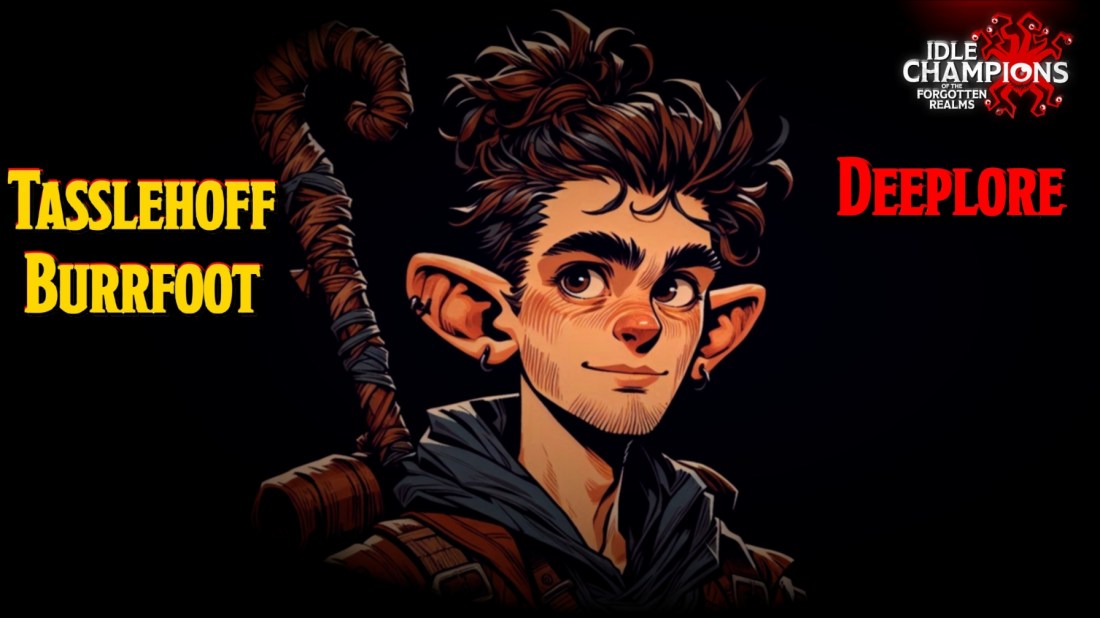
D&D Deeplore: Tasslehoff Burrfoot – Chaos That Shouldn’t Work (But Does)


Tasslehoff Burrfoot is one of the strangest success stories in all of Dragonlance. Not because he is powerful or wise, but because he is neither of those things and still manages to shape the world around him. Tasslehoff is a character who should not work, should not survive, should not matter – yet he does. His impact comes from something simple: Tasslehoff does not change the world by changing himself. He changes it by being impossible to ignore.

To understand Tasslehoff, you first have to understand what a kender is. Kender do not feel fear the way other races do. They do not treat danger as a warning. Threats are curiosities. A dragon becomes a creature worth talking to. A locked chest becomes a puzzle. A villain’s lair becomes a sightseeing opportunity. This is not courage. It is a missing instinct. And Tasslehoff Burrfoot embodies that missing instinct more than any other kender.

From the moment he appears, Tasslehoff treats the world like a playground. Traps attract him because they look interesting. Cursed artifacts end up in his hands because they seem lonely. Tense moments collapse because silence makes him restless. The result is not harmless mischief. Plans fall apart. Missions become harder. The group is forced to improvise again and again. Yet the same unpredictability that causes trouble also saves lives. Tasslehoff stumbles into solutions no one else would have found.

His chaos has structure. It exposes the truth about the people around him. Caramon’s protectiveness, Raistlin’s irritation, Flint’s reluctant affection, Tanis’s exhaustion – Tasslehoff brings all of it to the surface. He does not grow in the traditional sense, but he reveals the growth others need. Tasslehoff Burrfoot becomes the emotional stress test of the party. Fragile things break around him. Hidden things come to light. Not because he intends it, but because he cannot imagine a world where secrets stay secret.

Tasslehoff is more than a mirror. He is a contradiction in motion. Compassion drives him, but boundaries mean little to him. His desire to help often complicates situations before it improves them. He cares deeply about people, yet forgets that people can die. Innocence defines him, but that innocence carries risk. This tension gives him weight. He is not a mascot. He is a force that reshapes the story simply by existing.

His pockets say everything about him. They hold a broken buckle, a shiny stone, a key to a door no one remembers, a trinket he picked up because it looked sad. Most of it is useless. Some of it is dangerous. Occasionally, one of these objects becomes exactly what the party needs. Tasslehoff does not collect items. He collects possibilities. And possibilities rarely behave.

His relationships anchor him. Flint Fireforge scolds him constantly, yet watches over him with quiet loyalty. Caramon treats him like a younger brother who needs supervision. Raistlin studies him with a mix of irritation and curiosity. Tanis manages him with the patience of a tired parent. Laurana sees the good in him even when others lose patience. Tasslehoff does not fully understand these dynamics, but he feels them. His loyalty is absolute, even if his attention is not.

Loss touches him as well. Tasslehoff does not become grim or hardened. He does not turn into a darker version of himself. But he feels grief. He carries it differently. Instead of collapsing, he remembers. He talks about the people he has lost. He honors them by continuing to live with the same chaotic curiosity they once found exhausting. His resilience is quiet, but real.

Tasslehoff Burrfoot works because he breaks narrative rules without breaking the narrative. He is unpredictable without being pointless. Innocent without being naive. Chaotic without being destructive for destruction’s sake. He does not need a character arc because he functions as the arc. The world bends around him, reveals itself through him, and becomes more honest in his presence.

That brings us to Idle Champions of the Forgotten Realms. Tasslehoff is not in the game – at least not yet. His appearance is only an educated guess, a possibility circulating through the usual spoiler channels. If he ever joins the roster, he would stand out not because of raw strength, but because of how he interacts with the world.

Any mechanical ideas for him are speculation. But capturing Tasslehoff Burrfoot would require risk. A stolen item might grant a powerful buff after briefly lowering your damage. A rare effect could trivialize a boss or force you to adapt on the spot. A sudden shift in formation might disrupt your plan before rewarding you with a burst of power. These are not predictions. They are possibilities – the kind of unpredictable potential that fits a character who has never behaved predictably.

Tasslehoff Burrfoot is not a hero because he grows. He is a hero because he refuses to stop being himself, even when the world becomes darker than he understands. Chaos with heart. Curiosity with consequences. Innocence with impact. He should not work. Yet he does. And if he ever joins Idle Champions, he will bring exactly that energy with him – helpful, disastrous, and impossible to forget.

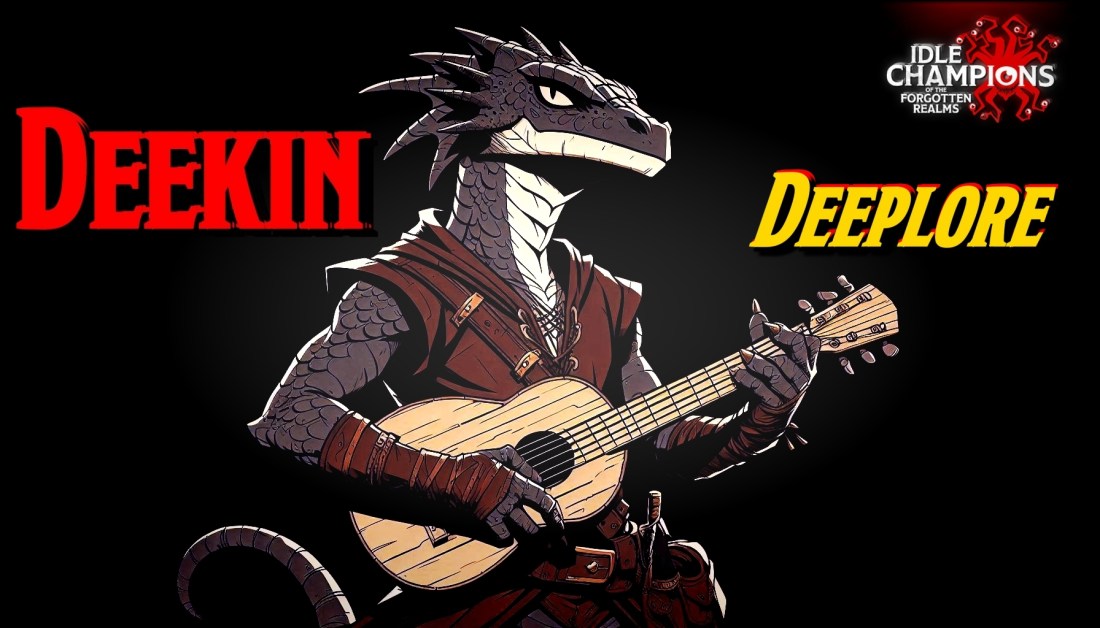
D&D Deeplore: Deekin Scalesinger – The Kobold Who Shouts DOOOOOM!

Deekin Scalesinger – a kobold bard with trembling scales, a quavering voice, and a heart that refuses to shrink to match his size. To many, he appears as comic relief: anxious, excitable, forever teetering on the edge of panic. A creature who shouts “Doom!” with such earnestness that it almost sounds like prophecy. But Deekin is not a joke.
He is a spark.


He does not dominate the battlefield through strength or spellcraft. He shapes its tempo through emotion. He does not command through authority. He commands through belief. And in a formation filled with giants, gods, and legends, it is the smallest voice that often pushes the story forward.

To understand Deekin, one must remember where he began. In Neverwinter Nights: Shadows of Undrentide, he first appears not as a warrior, but as a companion – nervous, earnest, and endlessly curious. Kobolds in the Forgotten Realms are fragile, numerous, and easily overlooked. They survive through traps, tunnels, and fear.
Deekin survives through narrative.

He attaches himself to heroes not because he expects protection, but because he is drawn to greatness. He believes in stories – dangerous ones, heroic ones, the kind that reshape the world. And he believes, with stubborn sincerity, that even a kobold can matter if he stands close enough to the moment where legends are forged.

He does not slow the world down. He urges it onward. He does not make the party safer. He makes the moment sharper. He does not wait for the story to unfold. He leans into it.

Deekin’s signature ability, Story of Doom, is often misunderstood. A kobold shouting “Doom!” should be comedic. And yet, somehow, those beside him grow stronger. Mechanically, it is adjacency-based buffing. Narratively, it is something deeper:

Deekin believes what he says.

When he cries “Doom!”, he is not performing. He is reacting. He feels the danger, the fragility of the moment, the sense that everything could collapse if the party hesitates. And because he feels it so intensely, those near him feel it too.

His urgency is not calculated.
His panic is not strategy.
His drama is not performance.
It is honesty – raw, unfiltered, unpolished.

And that honesty becomes strength. A routine encounter suddenly feels like a final stand. A simple skirmish becomes a moment that demands everything. Deekin does not reframe the battlefield with cold intention. He reframes it because his heart is convinced the world might end – and because he refuses to let it end quietly.

Heroes rise when someone beside them trembles and still chooses to sing.
This is not a global aura. It is not the voice of a commander shouting from afar.
Deekin inspires through closeness.

His power works best when someone stands shoulder to shoulder with him – close enough to hear the tremor in his voice, close enough to feel the urgency radiating off him, close enough to understand that his fear is real and his courage is, too.
He does not lead from a throne – he supports.

Deekin stands between heroes, small and shaking, and reminds them that the moment matters. His presence is not imposing. It is grounding. His fear does not weaken the party. It focuses them.
He does not mask his fear behind bravado. That transparency is what makes him trustworthy.
He is not the hero of the tale. He is the one who convinces the heroes that the tale is worth fighting for.

Then there is Confidence in the Boss, the ability that increases enemy spawns. On paper, it seems reckless. Why would anyone invite more danger? But Deekin’s logic is not the logic of a tactician. It is the logic of someone who grew up in a world where safety was never guaranteed.
For a kobold, danger is not escalation. It is the baseline. Tunnels collapse. Dragons pass overhead. Adventurers wander in with torches and steel.
Threats are constant, unpredictable, and rarely fair. Deekin does not see more enemies as a worsening situation. He sees it as honesty – the world revealing itself without pretense.
He does not escalate the threat. He recognizes it.
And in recognizing it, he accelerates the confrontation. If the world is going to test the party, better it test them now – while they are together, while they are ready, while the story still has breath.
This is not nihilism. It is courage sharpened by experience.

What makes Deekin compelling is not that he is powerful. It is that he is aware. He knows how small he is. He knows how fragile kobolds are. He knows how easily heroes fall. And yet he steps into formation anyway.

He does not try to become a dragon.
He does not try to become a legend.
He tries to make the moment matter.
He does not promise victory.
He promises significance.

And that is often the greater gift. In a roster filled with divine avatars and reality-bending spellcasters, Deekin reminds us that greatness is not measured in size or strength, but in the willingness to stand at the edge of doom and raise your voice anyway.

In the end, Deekin Scalesinger is not defined by his size, his fear, or even his cry of “Doom!” He is defined by the way he transforms that fear into momentum. He is defined by the way he stands close enough for others to feel his trembling – and close enough for them to draw strength from it.

He does not sing because the world is safe.
He sings because it is not.
He sings because someone must.
He sings because stories deserve witnesses.

And in singing at the edge of doom, he turns that doom into the very thing that drives the party forward.

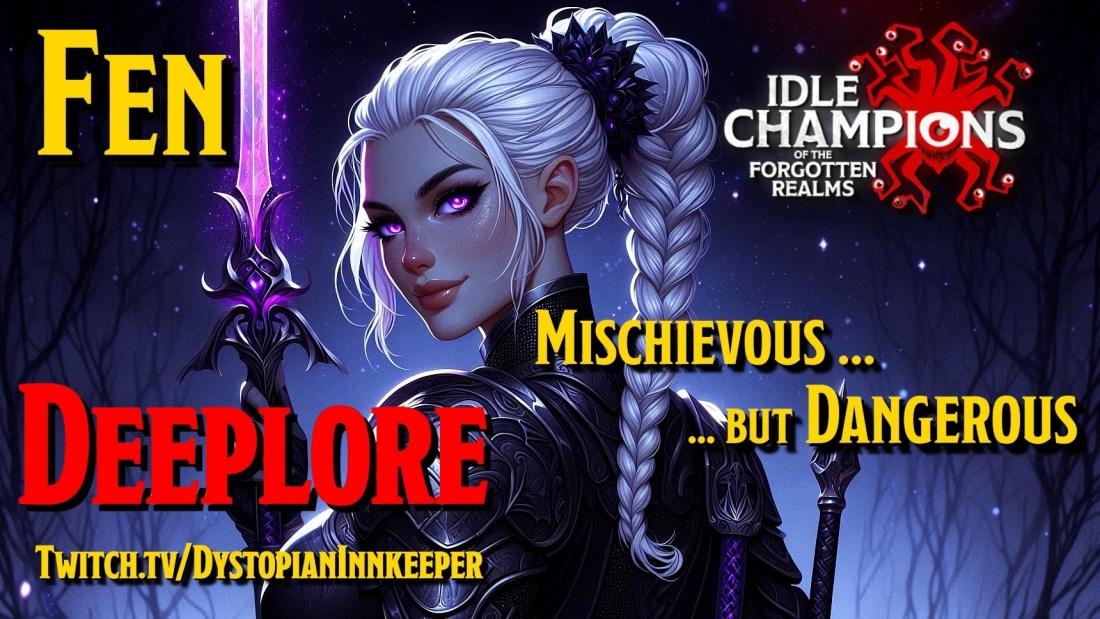
D&D Deeplore: Fen – The Art of Survival


Fen is a Wildhunt Shifter, and that already tells you more about her than any dramatic backstory could. Shifters grow up learning to read the world before it reads them. They learn who to trust, who to avoid, and when to move on. Fen didn’t become cautious because something terrible happened to her. She became cautious because she paid attention.

he isn’t fearless. She isn’t unbreakable. She isn’t the kind of person who walks into danger because she believes she’s meant to. Fen walks into danger because she’s done it before and survived it often enough to know she probably can again. Not always. Just often enough.

She trusts her instincts, even though they’re not perfect. Sometimes she reads a threat too early, sometimes too late. But she adjusts. She learns. She doesn’t pretend to be right all the time. She just tries to be right when it matters.

Fen’s strength isn’t that she’s hardened. It’s that she’s experienced. And experience, for her, means knowing the difference between fear and danger, and acting anyway.

How Fen found the Black Dice Society

    Fen didn’t join the Black Dice Society because she was looking for a family. She joined them because she recognized something familiar: people who had been pushed into the same kind of darkness she knew how to navigate.

    Nahara, Desmond, Valentine, Tatiana, Brother Uriah — none of them are simple. None of them are stable. None of them are safe. But they’re honest about their damage, and that’s something Fen respects more than heroism.

    She supports them the way she knows how: quietly, steadily, without asking for anything in return. And the more of them stand beside her, the more she gives back. Not because she becomes sentimental, but because she understands that survival is easier when the people around you understand what it costs.

    Fen doesn’t fix the Black Dice Society. She doesn’t guide them. She doesn’t protect them. She stands with them. And for someone like Fen, that’s the closest thing to loyalty she ever promises.

    Fen and the Patrons

      Fen’s connection to the Patrons isn’t mystical or emotional. It’s practical. She understands power — not in the abstract, but in the way someone understands a storm. You don’t negotiate with it. You don’t admire it. You don’t fear it. You read it, and you act accordingly.

      Mirt is easy for her. He’s a survivor, and survivors recognize each other. He doesn’t pretend to be noble, and Fen doesn’t pretend to be impressed. They understand each other without needing to like each other.

      Vajra is different. Controlled, disciplined, sharp. Fen doesn’t trust her, but she respects her. Vajra values competence, and Fen delivers competence without excuses. Their relationship is professional, and that’s enough.

      Zariel is dangerous, but predictable. Devils follow rules, and Fen likes rules when they’re written clearly. She would never sell her soul, but she knows how to work with someone who expects strength and rewards clarity. Zariel doesn’t intimidate her. She just requires attention.

      Elminster is the odd one out. He’s powerful without being oppressive, wise without being condescending. Fen doesn’t underestimate him, but she doesn’t overthink him either. He treats her like a person, and she returns the favor.

      And then there’s Strahd.

      Fen doesn’t hate Strahd. She doesn’t fear him. She doesn’t admire him. She recognizes him. She’s met men like him before — not as ancient, not as theatrical, but built on the same foundation: obsession mistaken for love, tragedy mistaken for depth, control mistaken for destiny.

      Fen gives Strahd exactly the amount of attention that keeps her alive. No more. No less. She knows he’s dangerous, but she also knows he isn’t unique. That’s what keeps her steady around him. Not defiance. Not bravado. Just experience.

      Strahd doesn’t accept Fen because he values her. He accepts her because Nahara matters to him, and Fen matters to Nahara. Fen understands that. She doesn’t take it personally. She doesn’t take it as a compliment. She takes it as a fact.

      What comes next for Fen and the Black Dice Society?

        The Black Dice Society is a story full of unfinished business. Fen’s future is tied to theirs, not because she needs them, but because she chooses them. She stays with them for the same reason she joined them: they make sense to her in a way the rest of the world rarely does.

        Fen will never be the strongest Champion in Idle Champions. She will never be the flashiest, the most dramatic, or the most optimized. But she will almost always be good. She fits into more formations than she doesn’t. She works with more Patrons than she doesn’t. And she remains useful even when the meta shifts around her.

        When Strahd enters the picture — through Nahara, through the BDS, through the Domains of Dread — Fen doesn’t change. She doesn’t rise to challenge him. She doesn’t shrink from him. She simply continues doing what she always does: reading the situation, choosing her moment, and surviving it.

        Fen isn’t the hero of the story. She isn’t the villain. She isn’t the chosen one or the cursed one. She’s the one who keeps going. The one who adapts. The one who doesn’t pretend to be more than she is.

        And in a world full of people who think they’re destined for greatness, someone who simply endures can be the most interesting figure of all.

        Fen won’t save the world. But she’ll still be here when the people who try are gone.