D&D Deeplore: Shadowheart – Memories remain in the Shadow

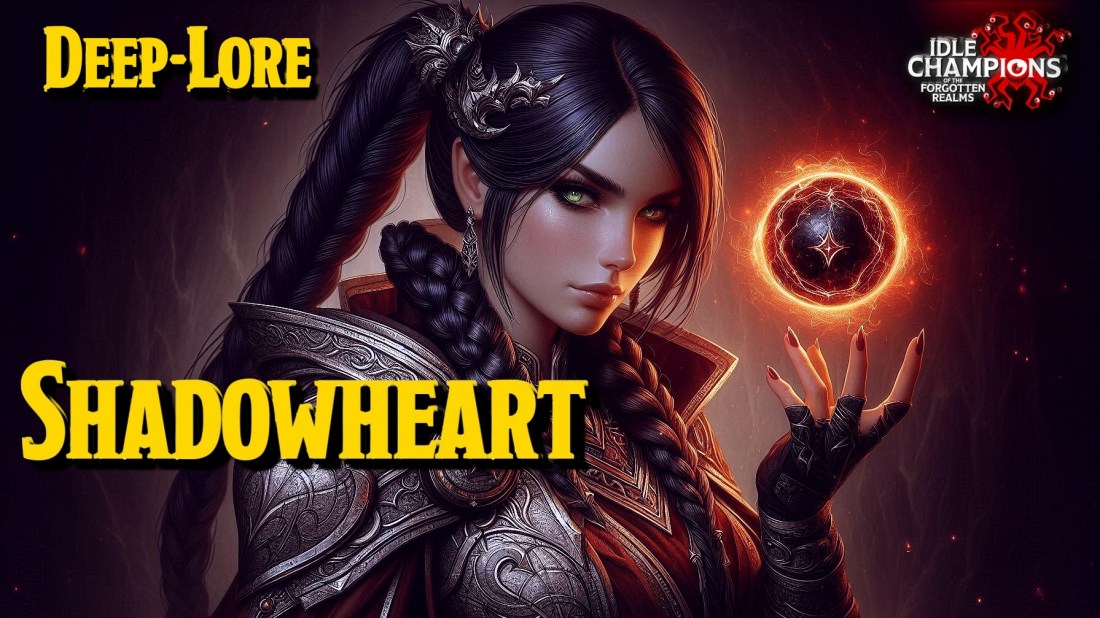
Shadowheart is a character built on contradictions. She moves through the world as if she’s always halfway in shadow, halfway out of reach, and that is very much by design. Her past is hidden, her loyalties are layered, and even when she speaks plainly, there’s always the sense that something remains behind a locked door. To understand her, you have to accept that she is a puzzle that doesn’t want to be solved too quickly. And that is the charm. Not perfection, not heroism, but a person trying to reconcile the fragments of a life she didn’t choose.

She begins as a cleric of Shar, the Mistress of the Night, a goddess who thrives on secrecy, loss, and the erasure of emotion. Shar doesn’t ask for devotion; she demands it. In her service, memories are tools, pain is discipline, and the self is something to be shaped rather than discovered. Shadowheart was molded through that philosophy. She didn’t grow into her beliefs. She was sculpted into them.

Her earliest history is hidden even from herself. Not metaphorically, but literally. Her memories were sealed away by her own order, her identity carefully rewritten to protect a mission she was trained to carry out without hesitation. She was not meant to question her past. She was meant to obey, to serve Shar’s will without pause, and to keep her secrets even from herself. And that is important, because it means she begins her journey with an artificial certainty. A certainty built on missing pieces.

She belongs to the Sharran sect known as the Daughterhood of Shar, an elite circle of devoted initiates. Their goal is simple and cold: carry out the goddess’s hidden work, manipulate events from the darkness, and ensure that Shar’s interests are woven into the world like black thread through fabric. Shadowheart was one of their chosen. Not by birth, but by selection, indoctrination, and design.

At the start of her story, she carries an artifact meant to be delivered into the hands of her goddess. Her entire identity revolves around this mission. She trusts her faith. She trusts her order. She trusts Shar. That doesn’t make her blind; it makes her shaped. And that distinction defines her far more than her spell list ever could.

Her loyalties are complex. On the surface, she is loyal to Shar. Underneath, there is tension. You see it in her reactions to kindness, in the way she flinches at comfort, in the awkwardness that comes when she receives genuine care. A Sharran is taught to let go of attachment. Shadowheart wants attachment, even when she tells herself otherwise. She appreciates competence, confidence, and patience in others. She values calm and steadiness. But she struggles when those same qualities are directed at her, as if they shine too brightly on places she has been taught to hide.

She is embedded in an unusual group of companions, each with their own obsessions and scars. What binds her to them is necessity at first, but gradually something closer to trust. It is slow, often painfully so, and riddled with conflict. She expects betrayal far more than she expects loyalty. Not because she’s unkind, but because she was raised to imagine the world as a place where all bonds eventually snap. And so she tests others without meaning to. She pushes them away when she wants them close. Her loyalty, once earned, becomes steady and resilient, but reaching that point requires navigating walls she doesn’t always realize she built.

She values subtlety. She dislikes reckless heroics. She respects intention more than bravado. And she despises zealotry, which is ironic, given her upbringing. But Shadowheart’s personal weakness mirrors her greatest strength: she is torn between the person she was made into and the person she might want to become. That conflict gives her depth and unpredictability. It also gives her flaws.

Shadowheart can be guarded to the point of frustration. She withholds information long past the point where trust would have been reasonable. She can become defensive when challenged, brisk when confronted, and occasionally brittle when her beliefs are questioned. This doesn’t stem from arrogance but from fear. Her identity is built on carefully arranged pieces. If one of them is pulled out, she risks the whole structure collapsing. She defends her doubts by pretending she has none.

At the same time, she is capable of quiet compassion. Not the loud, heroic kind, but small gestures, often indirect ones. She softens when she sees others suffer in ways she recognizes. She reacts strongly to cruelty, even when she tries to hide it. Her emotional distance is a mask she tries to maintain, not one she actually wants. And the longer she travels with companions who treat her as a person rather than a vessel of Shar’s will, the more cracks appear in that mask. She doesn’t always like what those cracks reveal, but she can’t ignore them.

Her greatest strength is her ability to change. Not quickly, not easily, and not always gracefully. But genuinely. Few characters manage to stand in the tension between indoctrination and independence without simply flipping to one side. Shadowheart lives in that tension, and she wrestles with it. Her arc is not the story of someone who discovers their true self; it is the story of someone who actively constructs it, piece by piece, choice by choice, even when every instinct tells her to cling to the old shadows.

Her weaknesses are tied to that same struggle. She is suspicious. She is slow to trust. She hides behind duty when emotion becomes too uncomfortable. She sometimes mistakes silence for strength. She occasionally confuses obedience with purpose. But those flaws are honest flaws. They are not melodramatic, not exaggerated. They are the kind of flaws that feel lived-in.

Shadowheart’s identity is not static. Her loyalties can evolve. The truth of her past, once uncovered, adds weight rather than clarity. She learns who she was before Shar reshaped her, and that knowledge forces her to confront everything she has been taught. She must choose which memories to honor and which ones to release. And this choice is not just philosophical. It changes her behavior, her beliefs, and even her abilities. She is a character built around the question: who am I when both versions of myself claim to be the truth?

She is not a saint and not a villain. She is thoughtful, flawed, defensive, vulnerable, and surprisingly brave when it matters. Her story is full of internal echoes: things she lost, things she regained, and things she must let go of to grow. She is not defined by Shar. She is not defined by the fragments of her past. She is defined by the uncomfortable, difficult, persistent work of choosing whom she wants to be next.

That’s why she resonates with players. Not because she’s powerful. Not because she’s mysterious. But because she embodies something very human: the struggle to move from a version of yourself that feels safe into a version that feels true. And she does it slowly, imperfectly, sometimes painfully, but always sincerely.

Shadowheart is not a heroine carved in marble. She’s someone trying to walk forward while pulling her shadow behind her. And that makes her memorable in a way polished, flawless characters never are.
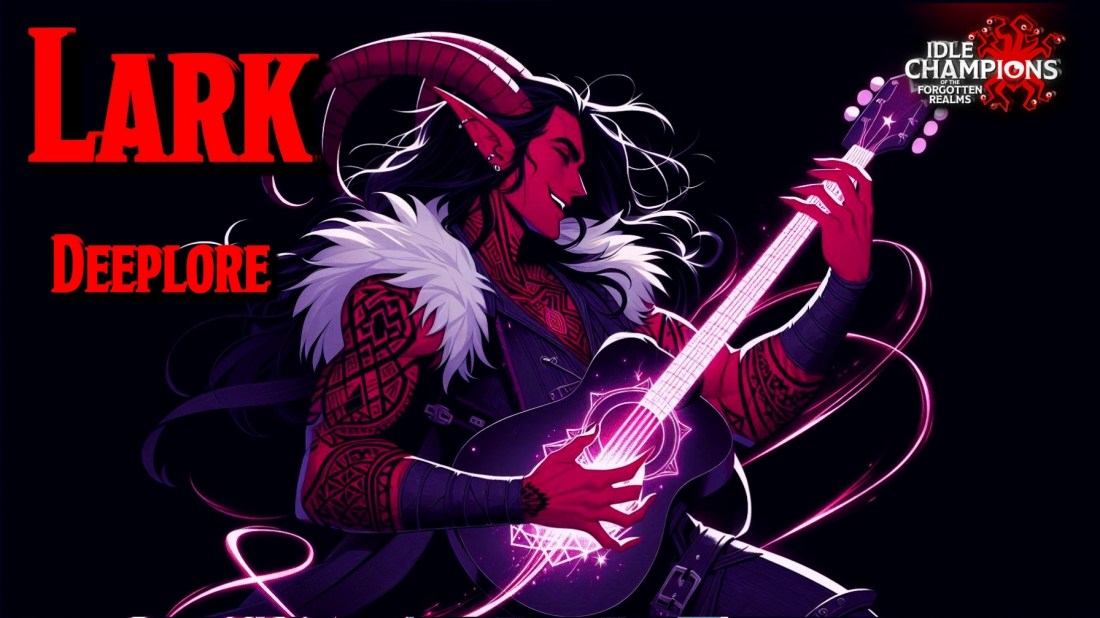
D&D Deeplore: Lark – The Show Behind the Smile

Welcome back to the Dystopian Inn, weary traveler. Tonight’s tale is about Lark – a Tiefling bard who walks the razor’s edge between spotlight and shadow. A wanderer with a voice like velvet and a past full of broken chords, he survives by wit, charm, and the hush before applause. In every tavern he enters, danger follows… yet so does the music.

Lights rise on a lonely, dimly lit tavern deep in a crooked port-town harbour. The smoky air is thick with the scent of salt and spilled ale. Flickering torchlight dances across tired faces and weather-worn beams. And then the door creaks – a figure enters. He moves with measured confidence, a slight tilt in his head, lips curved in a wry half-smile. A Tiefling, eyes glinting with secrets, a lute strapped behind his back, a crossbow slung casually at his side. This is Lark.

Lark is not a hero. He is a performer. A survivor. At 29 years, chaotic in alignment, he carries the scars of a past he refuses to show. He left his old band of traveling minstrels under cover of darkness – no fanfare, no announcement, no trace. Rumors whisper: jealousy among fellow bards. A betrayal. Or perhaps horrors better left unspoken. Whatever the truth, he vanished. His laughter, once bright and loud, was muted; his songs became whispers in the night. But the hunger for applause, for a spotlight, never died.

He wandered alone, footsteps echoing in empty inns and silent streets. Then one night, chance or fate brought him to a ragged group calling themselves the Fallbacks. Rough around the edges, perhaps – but strong. Fierce. Loyal. For a man such as Lark, hunted by phantom enemies he will not name, the Fallbacks offered protection. A shield against the shadows that trailed him. He expected simple security. Instead, he found belonging – a fractured family bound by necessity rather than blood. And, as uncertain and fragile as it is, he clings to it.

Because even in the deepest darkness, light draws eyes. Lark rediscovered the power of his voice. Not just music now, but survival. He learned that words can wound sharper than steel. That a well-placed insult fractures courage. That a melody can stir hope – or despair. He became a bard once more, but not as he had been. This time, with purpose.

The world can be cruel to Tieflings with tongues sharper than gunshots. Lark knows that better than most. His reputation grew slowly – whispers in taverns, hushed chatter among patrons, glances filled with equal parts awe and suspicion. He courted attention, but never safety. Standing in the light means the shadows gather. Every cheer is a reminder: someone watches. Someone waits for him to slip.

And slip he almost did, more than once. He favors words over weapons, but he did not forsake arms. At his side rests a small crossbow – “Last Resort”, he calls it. A name heavy with resignation and threat. When mockery fails, when the laughter dies down and foes draw close, Last Resort speaks in silence and death. But Lark rarely draws it. His art is subtler, more insidious. A flick of the tongue, a mocking refrain, a whispered promise – then retreat into darkness before eyes widen in fear or pain.

He has learned to keep moving. Never stay in one place long after the performance ends. The applause fades quickly; the danger remains. Sometimes he vanishes at dawn, footprints lost in alleyways. Sometimes he sneaks away during a city’s night watch, slipping into crowds. The Fallbacks help – flank him, shield him, watch his back. But only he knows the fear when silence follows laughter. Only he knows the echo of footsteps that are not his own.

In the heart of the Fallbacks he found more than protection. He found purpose. A reason to keep singing. Because the show must go on. And sometimes, the show is the only shield you have. He learned to use his art like armor, his songs like weapons. And the city’s sordid taverns became stages for survival. For survival with style.

Lark never asks for forgiveness. He does not beg for understanding. He demands attention, for in that fleeting moment beneath candlelight, within the hush before the first strum, he is seen. Alive. Dangerous. Unconquered.

There are nights when he stares at the strings of his lute, fingers hovering as if expecting ghosts to answer. He wonders how many he left behind. How many enemies wait for him in the crowd. Sometimes he hears whispers – not from enemies, but from memory. A soft voice of regret. A sharper one of guilt. But he silences them. With a tune. A joke. A drink… or a bolt from Last Resort.

Lark does not believe in redemption. Not for him. Not yet. He believes in survival. In escape. In the next performance, the next laugh, the next hush before applause. Because every stage reset is a promise to himself: I survived another night. I outran them. I remain free.

His eyes flick toward the horizon, toward the next tavern, the next crowd, the next set of ears to charm. He walks that tightrope between light and shadow – and loves the danger. Not because he seeks glory, but because he respects truth: the world owes him nothing. The world will spit at Tiefling bards, laugh at songs sung in hellish tongues, and draw cruel knives in gilded halls. Lark accepts that. He thrives on it. Because he knows fear, and fear sharpens performance like a whetstone.

In the gloom before the crowd gathers, he breathes deep. Fingers find lute strings. His voice – rough, soft, melodic – glides through silence. Just one note. A beginning. The drums of ale mugs. The rustle of cloaks. The shifting breath of strangers. And then the hush. That sacred hush before the first chord rings out.

And in that hush, Lark feels alive. Every laugh, every sigh, every silence – a pulse in the dark. His audience leans in. His eyes shine. The spotlight warms him like fire. For a moment, he is not a hunted Tiefling. He is not a fugitive. He is not broken. He is something else. Something dangerous. Something unforgettable.

When the song ends, the applause rises – a wave that threatens to drown him, but also lifts him. He bows. Softly. A mock flourish. Then he vanishes. Into the crowd. Into the night. Into the unknown. Always one step ahead. Always on the run.

Because for Lark, every farewell is temporary. Every stage a refuge, every performance a lifeline. And every note a promise: so long as he draws breath, he plays. He survives. He endures.

The show goes on. So must he.

And somewhere, in the shadows of taverns and nightmares, the hunters wait. But tonight – tonight the only thing that moves is the melody.

As long as the lute still hums, as long as his lips still smile – Lark remains free.

Lights fade. Curtain falls. The echoes linger.

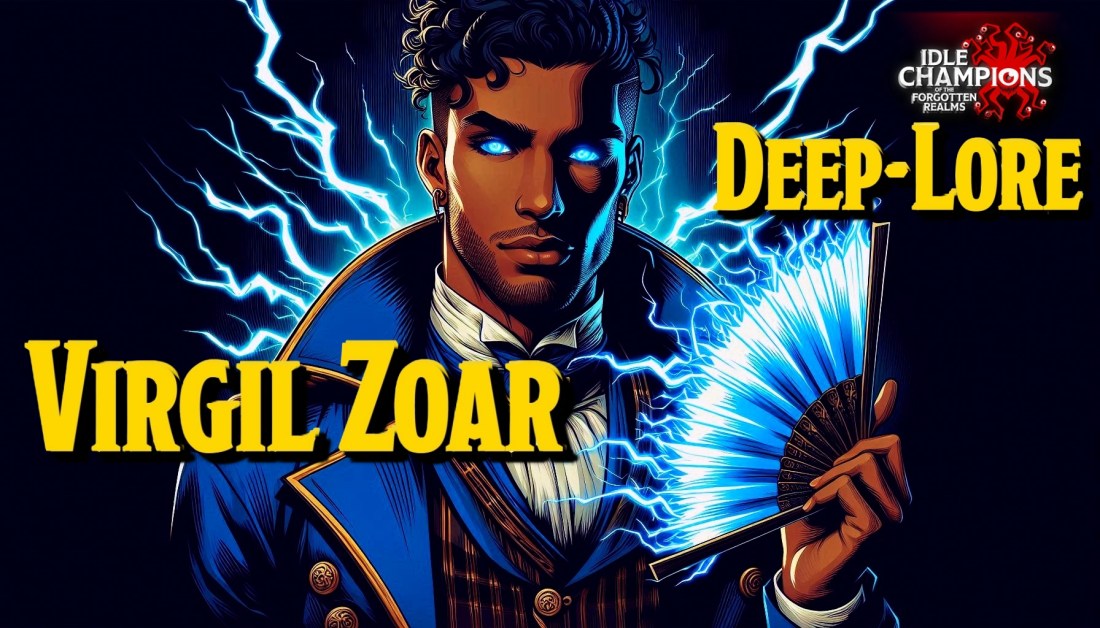
D&D Deep Lore: Virgil

Not all storms rage. Some whisper. Some wait. And some wear silk gloves while holding lightning (and a fan). In this Deep Lore, we follow Virgil Zoar – storm sorcerer, Aasimar, and quiet tactician of the Rivals of Waterdeep. Where Kent dances with ghosts, Virgil listens to the wind. Where others seek glory, he seeks equilibrium.

Born under open skies and shaped by restraint, Virgil is not the hero of tavern songs: he is the pause before thunder. The breath held between grief and grace. And beside him, always, Kent – the spark in the eye of the storm. Together they do not save each other. They simply refuse to let the other vanish. This is not just a story of magic and mechanics. It is a study in patience, in clarity, in the art of holding emotion gently.

D&D Deep Lore: Kent

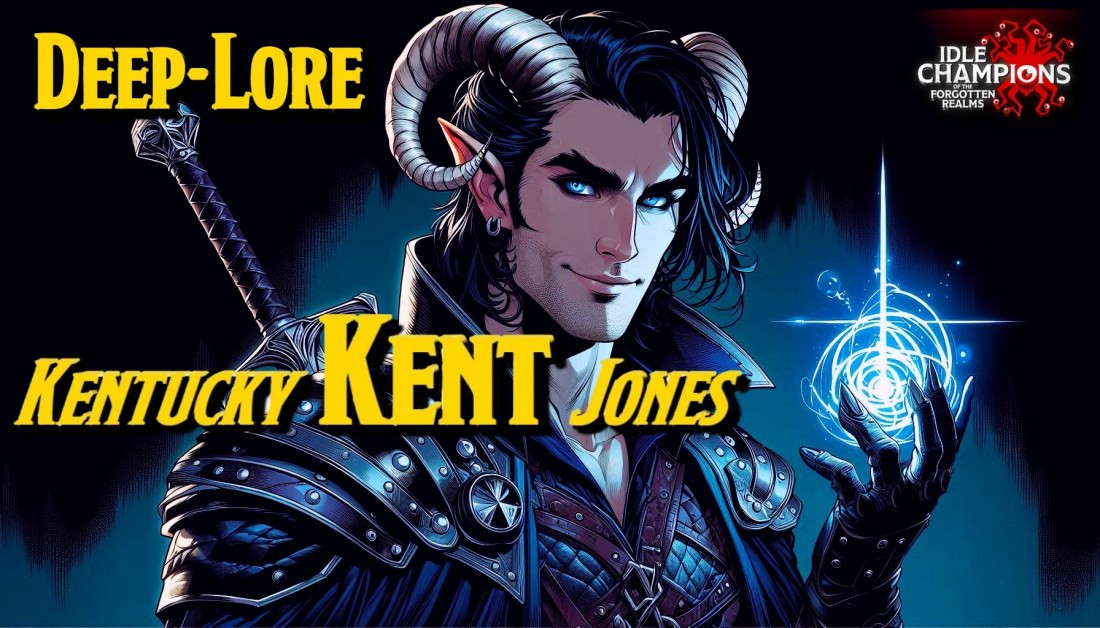
Welcome back to the Dystopian Inn, traveler. Tonight’s tale is not about glory, nor vengeance, nor destiny. It’s about Kent – a Tiefling rogue, flamboyant scholar, and one of the most quietly tragic figures in Idle Champions of the Forgotten Realms.


Kentucky “Kent” Jones, archaeologist by passion, survivor by necessity, once chased knowledge into the ruins of Talona’s temple. He emerged alone. His team did not. Caradoon saw a hero. Kent saw ghosts. And he’s been trying to justify his survival ever since.
This Deep Lore explores the man behind the charm: the sleepless nights, the weight of memory, and the rituals of remembrance that shape his every move. From “Tokens of the Departed” to “Wails from the Grave,” Kent’s abilities aren’t just mechanics – they’re echoes of the past, turned into power.
And then there’s Virgil. The quiet storm to Kent’s restless flame. Together, they form the Rivals of Waterdeep – not by fate, but by understanding.
Where Kent burns, Virgil grounds. Where Kent falters, Virgil steadies.

Kent isn’t a hero. He’s not a villain. He’s a man who made it out when others didn’t. And every joke, every blade flicked with theatrical precision, is his way of remembering differently.

So when you see Kent in Idle Champions, don’t just see a Rogue with spectral flair. Listen. You might hear the whisper of something older.
Something human. A scholar’s mind, burdened by ghosts.

Next time, we follow Virgil into the skies. But for now, settle in. The past deserves to be known.

Idle Champions: Reworked Havilar With some mishaps.

Havilar has been reworked, and it’s time to put her to the test-starting with Variant 1: “Odd Ones Out.” With half the bench slots locked and only the Brimstone Angels allowed to break the rules, it’s a challenge that demands creativity, patience, and a bit of family bonding. Havilar, Farideh, and Mehen step up, but low item levels and missing DPS make things… interesting.

From the very first setup, mishaps abound: champions in the wrong slots, BUD-setting bouncing between Kent, Farideh, and Durge, and Evelyn tanking like a champ while Jarlaxle dies on impact. The server lags, Vi’s Sass-stacks fall behind, and the Faithful Friend slot seems to have a mind of its own. But through it all, Havilar holds the line-buffing from the front, summoning imps, and stacking Leadership Summit like a true infernal tactician.
As the run pushes toward Area 1200 and beyond, the formation shifts, the gold climbs, and the Brimstone Angels rally. It’s not smooth, it’s not elegant, but it’s effective. By the end, Variant 1 is cleared, Havilar gains 300 item levels, and seven gold chests are earned-along with a healthy dose of disbelief that it actually worked.
Now, with Variant 2 looming and Diamond Golems waiting to be tanked, it’s time to let the game run overnight and hope the server holds. Havilar may be young, but she’s already proving she can carry a team-even if that team is missing half its seats.

Oh, and that Havilar-Spotlight-Video – you can find it here:

Something Wicked This Way Comes: Skylla Spotlight

A new force enters Idle Champions on November 5th 2025 – her name is Skylla, and she borrows powers from Baba Yaga herself. Seat 4 Warlock, Support & Debuff, her whispers twist the battlefield and her fire punishes the unwise.

Watch her Spotlight right here:

In the annals of Dungeons & Dragons, where countless names flicker like candles lost to history, only a few villains burn bright enough to cast shadows across ages. Skylla is one of them. A warlock whose ascent began in the earliest days of the game, she embodies an older, darker style of fantasy-where ambition is sharper than any dagger, and the pursuit of power leaves no room for apology.

Skylla’s story begins long before she was feared. Born in a world that would later be known as Mystara, she was marked from childhood by a relentless intellect. Magic came to her like breathing, and though others celebrated wonder, she questioned limits. Motion, power, destiny-she sensed that arcane law existed only to be rewritten.

When she reached adulthood, Skylla joined a fellowship of adventurers. Among them stood Warduke, the infamous black-armored warrior whose legend would rise alongside-and then against-her own. Steel and spell stood united in those early days. The company fought horror and chaos together, guided by youthful dreams of glory.

But unity hides fractures. Skylla’s companions saw their missions as acts of heroism. She saw them as squandered opportunities. They sealed dark vaults when she wished to learn what secrets lay inside. They destroyed relics of power, blind to the potential she alone recognized. In every triumph she felt a loss. Their ideals became her chains.

And then came the turning point that severed her from the path of heroes.

Some tales whisper she struck a bargain with a demon. Others say she stole forbidden knowledge. But the truth-newly revealed in modern chronicles-speaks a more chilling name: Baba Yaga, the Mother of Witches herself. From that infamous arch-hag, Skylla drew terrible power. Feywild trickery and unpredictable magic infused her spells, shaping her into a warlock whose craft bent minds, distorted the battlefield, and revealed weakness where others saw courage.

Her companions recoiled. Warduke’s blade was the first drawn against her. And in that single moment, trust shattered. Skylla was cast out, condemned as traitor.

Exile did not break her. It refined her.

Where heroes sought honor, Skylla sought results. She found sanctuary among the League of Malevolence-a gathering of villains who valued strength above sentiment. But even then, she stood apart. Allies, as she saw them, were merely instruments. Useful while they played her tune. Disposable once they fell out of step.

While others schemed for coin or conquest, Skylla’s ambition fixed itself on something greater: legacy.

She mastered warlock invocations that lured foes into illusion, tangled their minds in hypnotic patterns, and painted their silhouettes in faerie-fire brilliance-marks of doom for any who opposed her. Her magic was less about raw destruction and more about humiliating control. She broke willpower before she broke bodies.

Warduke, too, rose in power. Yet his infamy was a blade forged from rage. Skylla’s was crafted from intellect. Their rivalry became legend-two former allies battling not just for dominance, but for the story itself. She believed he had stolen the life she deserved, leaving her to be remembered only as the exile. He believed she had betrayed them all. So they clashed again and again, their hatred written into every strike and spell.

But Skylla’s heart holds no nostalgia.

Where others cling to lost friendship, she looks only forward. Her eyes are fixed on a throne no one else imagines.

And it is this unyielding conviction that defines her true power.

Skylla’s magic draws from chaos, misdirection, and the fear that grows in silence. Her enemies underestimate her-often fatally. She does not shout like warlords or roar like dragons. She whispers. She smirks. She watches her foes scramble against their own illusions while she prepares their downfall.

The League of Malevolence knows this well. They respect her because they must. They know that should they falter, Skylla will be the first to strike, to step over their failures without pause. But as long as they serve her schemes, they are safe-relatively. Power, to Skylla, is an equation. And she has always been good with numbers.

In a wider sense, Skylla is a relic reborn. When the world of Dungeons & Dragons shifted focus to new realms and new heroes, many early villains faded into obscurity. Skylla refused to vanish. Through various editions, through nostalgic revivals, through re-imagined roles in digital adventures, she remained-a reminder of the ruthless storytelling that shaped the game’s foundation.

What makes her so compelling is that she is not evil without cause. She is ambition given voice. She is genius without restraint. She is what happens when the world punishes brilliance rather than nurturing it.

Her philosophy, spoken through actions more than words:

Why ask permission to seize greatness? Why bow to lesser minds simply to appear heroic? If the world rejects you-rewrite the world.

Some would say she envies Warduke’s fame. Skylla would answer: fame is merely applause. Power is permanence. She intends to be remembered not as a rumor, but as a rule.

There are whispers, even now, that she seeks more gifts from her patron. That she studies ways to twist immortality as a tool-not to cling to existence, but to ensure that every age must reckon with her name. If she succeeds, the League of Malevolence may become a footnote in her saga. Warduke may become nothing more than a warning.

Every spellbook she fills, every pact she deepens, every rival she crushes is just another step. Skylla believes history will not ask whether she was right-only whether she prevailed. And she has no intention of losing.

Even the Feywild, with all its shimmering unpredictability, seems to bend uneasily around her. Illusions that once delighted faeries now serve as weapons of dominance. Enchantments crafted for mischief become instruments of terror. Chaos, to Skylla, is simply another element to be mastered.

Today, her red and shadowed garments remain an omen. Her emerald familiar-a sly, watchful companion-suggests her mind is always three moves ahead. When she walks into a room, the fearful do not ask what she wants. They ask when the price will come due.

There is beauty in her cruelty, some say. A terrible elegance. Skylla is not sloppy. She does not revel mindlessly in destruction. Every wicked act serves a purpose: to climb, to conquer, to continue.

And to ensure that no one will ever have the power to cast her out again.

In this, she is both a warning and a symbol. A warning that unchecked ambition scorches the soul. A symbol that even villains are forged from wounds that heroes choose not to see.

If she stands atop the world one day-and she believes she will-it will not be because fate favored her. It will be because she demanded it. Because she buried her past rather than being buried by it. Because she believed that greatness is seized, not granted.

Skylla is not the hero of this tale. But she is the force that drives tales to be told. When torches burn low and dice hit the table, when adventurers dare the darkness and delvers meet their doom, her shadow is never far. She is the ever-present reminder that in Dungeons & Dragons, villains are not accidents. They are choices. They are consequences.

And Skylla-Warlock of Baba Yaga, Mistress of Manipulation, Exile who rose higher than those who scorned her- she is consequence incarnate.

New Tale – King of Shadows

A new tale (and old hero) has arrived in Idle Champions of the Forgotten Realms:
The King of Shadows.
Sit by the fire and discover his story – if you dare.
It’s not for the faint-hearted. You have been warned …

The King of Shadows was not always a creature of darkness. His story begins with a dwarf named Annaeus, who created a guardian for the great Illefarn Empire – a realm built on the unlikely alliance between dwarves and elves.

This guardian was once a human man. He gave up everything, even his name, to fulfill his duty. He became the perfect protector: devoid of pride, ambition, or any desire that could compromise his mission. Drawing strength directly from the Weave, the magical fabric of the world, he was designed to defend Illefarn for eternity – and perhaps beyond.

The Fall into Shadow

But every legend has its turning point. Disaster struck when Karsus attempted to steal divinity from Mystryl, the goddess of magic. In that moment, the Weave vanished briefly. The guardian faced a terrible choice: die and leave Illefarn vulnerable, or reach for a darker power.

He chose the Shadow Weave.

That decision twisted him into something monstrous – a creature of shadow and hunger. He began draining the life from everything around him. The people of Illefarn soon recognized the corruption and tried to destroy him. But to the guardian, anyone who opposed him was an enemy of Illefarn itself.

Protector Turned Destroyer

The result was catastrophic. He annihilated the very people he had sworn to protect. Before the end, they managed to banish him to the Plane of Shadow – a second tragic twist in his tale. There, he remained imprisoned for centuries.

A Hunger That Never Died

Now, the King of Shadows seeks to return. Though Illefarn is long gone, he remains bound to a duty that no longer has meaning. His hunger has only grown. He commands legions of spectral Shadow Reavers and builds powers of darkness beyond imagination.

Driven by a warped sense of purpose, he aims to engulf Neverwinter — and perhaps the entire world – in eternal night. He is not merely a fallen guardian. He is the embodiment of corrupted power.

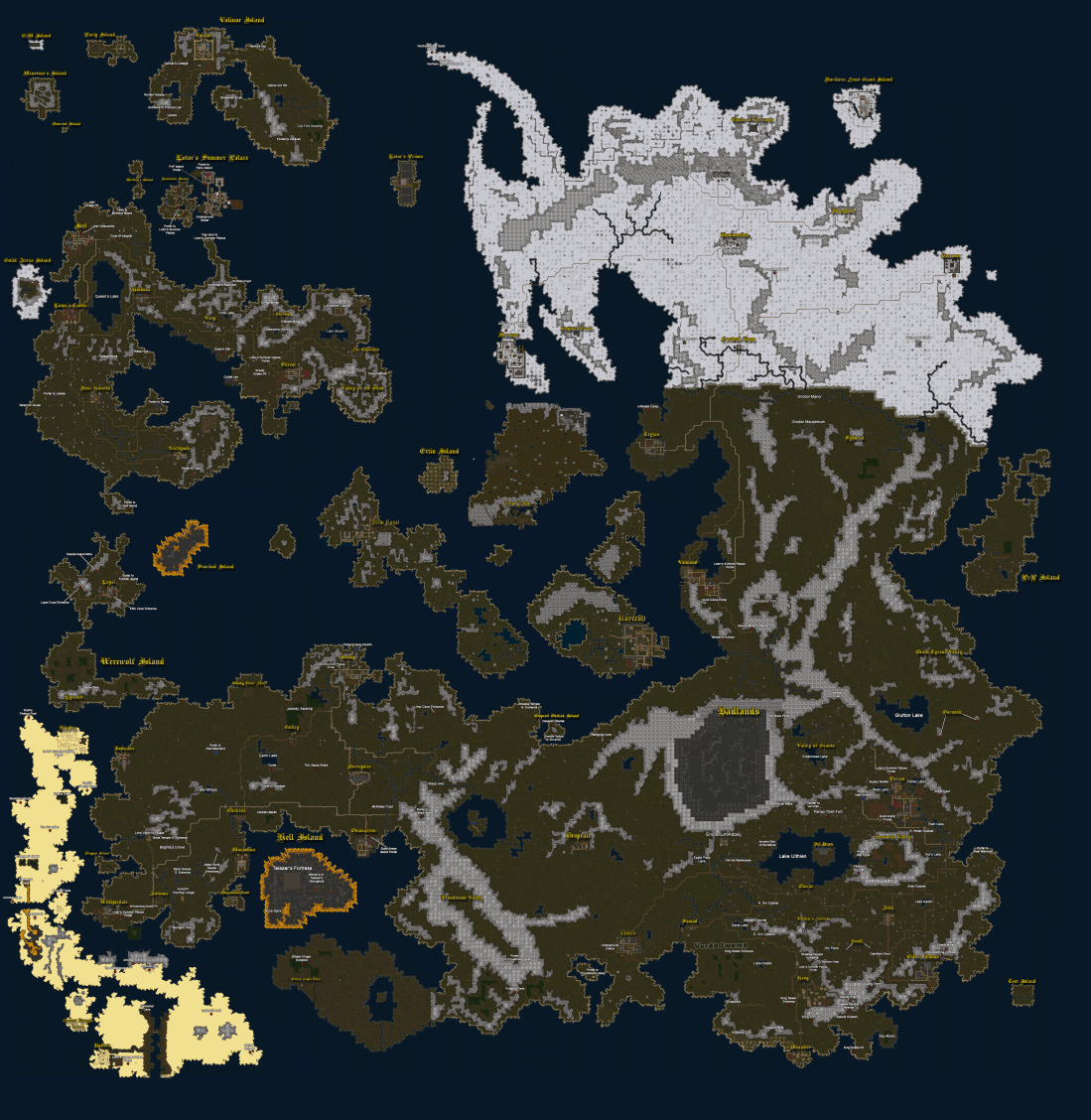
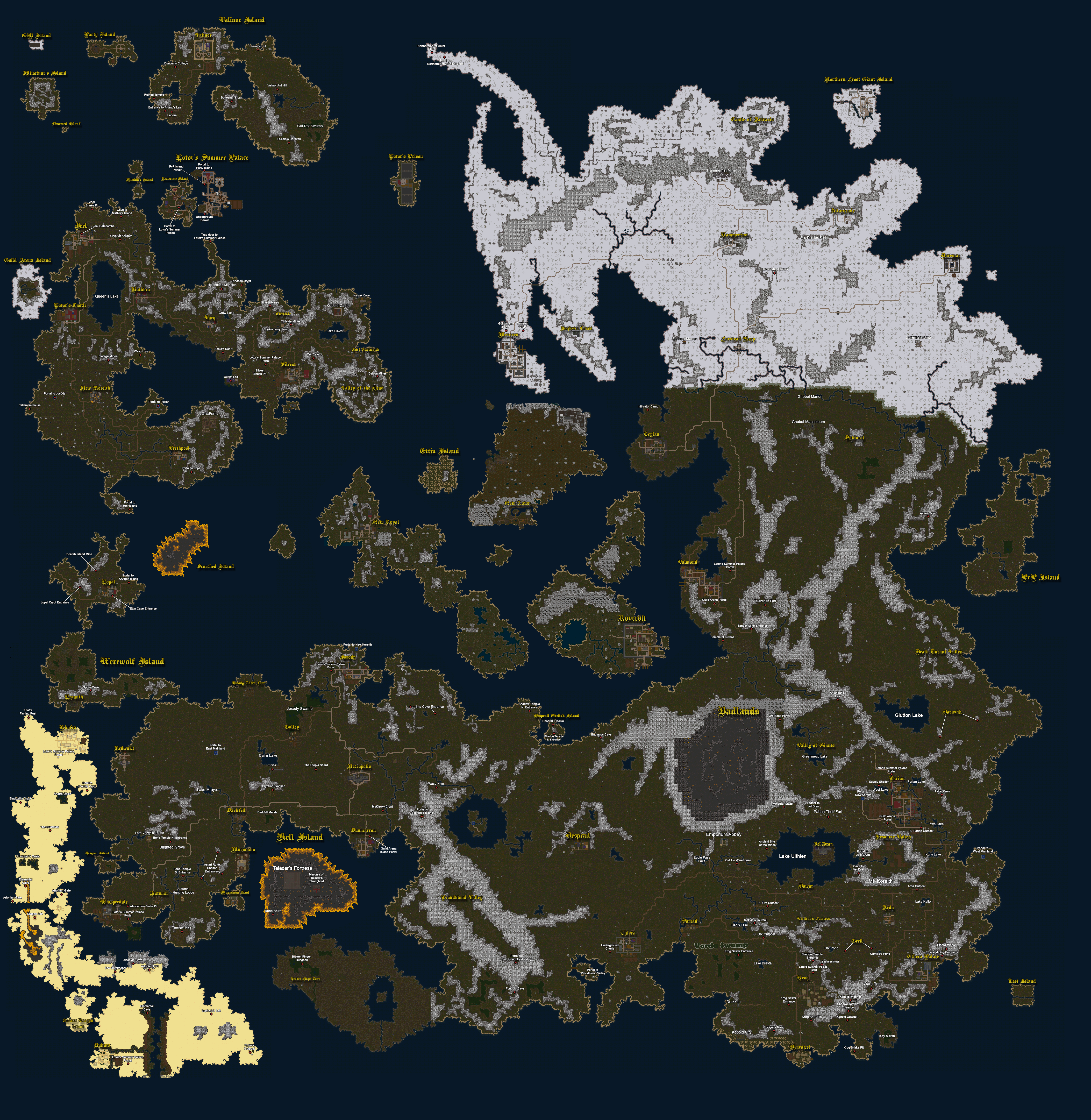
Worldmap of Dransik / Ashen Empires

Featured

Yay, I stole this one (credits go to AshenEmpiresVault)!
Maybe it’s for old time’s sake, maybe it’s useful for you – here’s the Worldmap of Ashen Empires – one of the greatest MMORPGs I play (since early beta which must have been around 2000/2001 – yay, that’s ~ 19/20 years!

Ashen Empires Worldmap! (I guess Astyria’s map isn’t as large (missing expansions) but it works for Astyria, too.)

You can download the game here– but be aware that it’s community is rather small (but growing daily again – let’s hope for the Steam-Launch!). People on the “Legends” server (non-PVP) are really quite helpful, if you want to start on the “Heroes” server (PVP) – yes, there are helpful people, too.