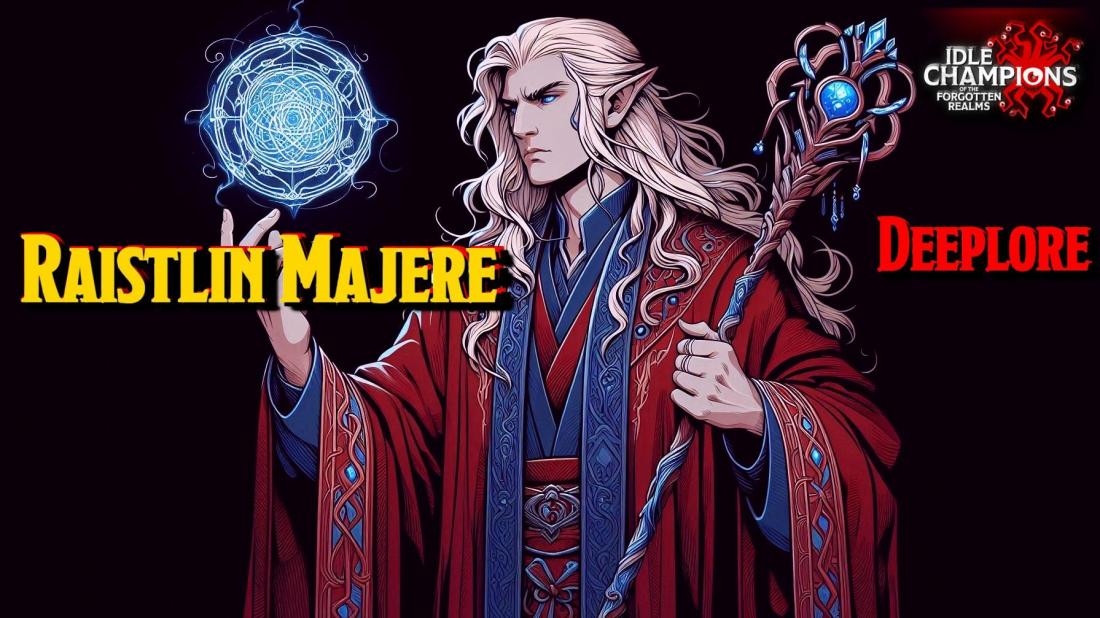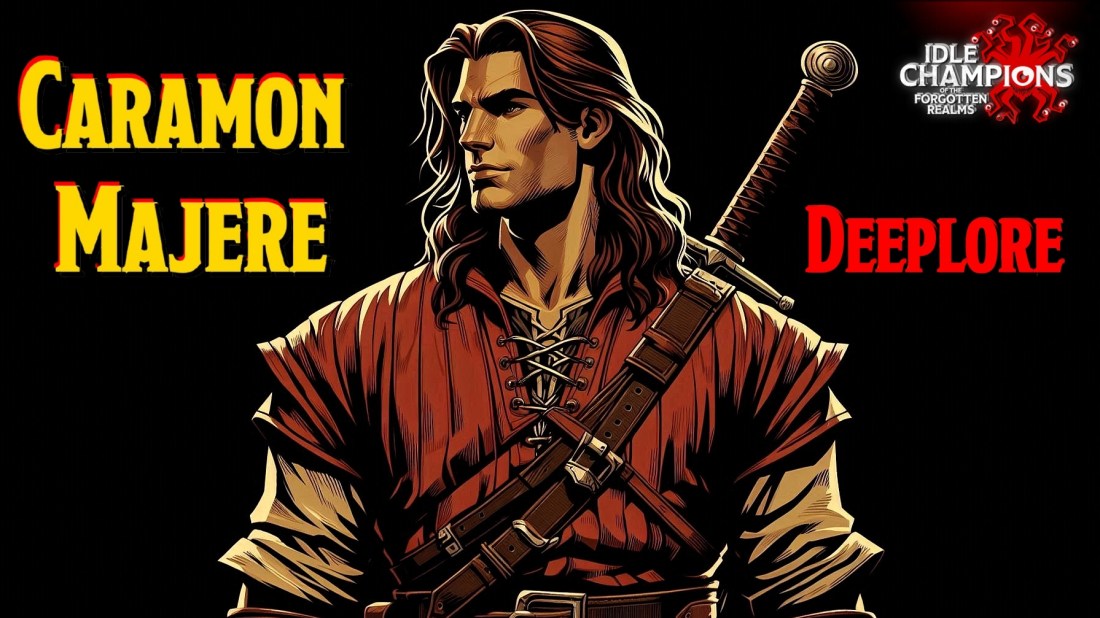
Will Caramon Majere ever step out of Raistlin’s shadow? Explore the tragic and powerful lore of Dragonlance’s most famous warrior and why his story is about so much more than just physical strength.
Caramon Majere is often introduced as the strong brother, the one who could lift what others dropped and stand where others faltered. But that description hides more than it reveals. Caramon’s strength was real, yet it covered a deep uncertainty he carried from childhood into adulthood. His life was shaped by a bond that gave him purpose, but also trapped him. And when that bond shifted, he lost his footing so completely that he nearly vanished inside his own despair. His story is not a tale of steady courage. It is the story of a man who had to rebuild himself after discovering that the foundation he relied on was never stable.
He was born in Solace, moments after Raistlin. The midwife fought to keep Raistlin alive. Caramon arrived without trouble. That contrast became the lens through which he saw the world. Raistlin struggled to breathe. Caramon didn’t. Raistlin’s body failed him again and again. Caramon’s felt like a shield he was expected to use. And because of that, Caramon grew up believing that his strength existed for one purpose: to carry the weight his brother couldn’t bear.
As a child, he stepped in front of blows meant for Raistlin. He dragged him out of fights Raistlin had provoked. He took the blame for things Raistlin had done. He didn’t resent it. He didn’t even think about it. Protecting Raistlin felt as natural as breathing. But that instinct came with a cost. Caramon never learned who he was outside that role. He never asked himself what he wanted. He never imagined a future that didn’t revolve around his brother’s needs.
He grew into a large, capable young man. He trained with weapons and found comfort in the clarity of combat. Swing, block, step, strike. No riddles. No hidden motives. Just movement and consequence. People liked him. He was easy to trust. He laughed often and loudly. But beneath that warmth lived a fear he never voiced. Caramon worried that without someone to protect, he would be useless. He worried that strength alone made him valuable, and that if he ever failed in that role, he would have nothing left.
Raistlin’s growing power made that fear worse. Caramon admired his brother’s mind, but he also felt the sting of Raistlin’s sharpness. Raistlin did not hide his frustration with Caramon’s simplicity. He did not hide his resentment of Caramon’s physical gifts. And he certainly did not hide his belief that Caramon’s loyalty was a chain he had never asked for. Caramon absorbed all of it. He told himself it didn’t matter. He told himself Raistlin needed him, even if Raistlin refused to admit it. But the truth was harder: Caramon needed Raistlin far more than Raistlin needed him.
During the War of the Lance, Caramon fought with determination. He held the line when others faltered. He protected companions who would not have survived without him. He was not a strategist, but he had instincts that saved lives. He was not a scholar, but he understood people in ways that mattered. Yet even in the middle of war, he felt himself slipping into the background. Raistlin’s reputation grew quickly. His magic became feared. His ambition sharpened. And Caramon, for the first time, began to feel like a tool rather than a partner. He was the arm that swung the blade, not the mind that shaped the plan. Useful, yes. But replaceable.
After the war, that imbalance finally broke him. Raistlin left to pursue his own path, and Caramon found himself without direction. Without his brother to protect, he drifted. His discipline vanished. His confidence collapsed. He drank heavily. He slept poorly. He pushed away the people who cared about him. He became a burden to Tika, who loved him but could not carry him. Caramon had always been the strong one, but now he couldn’t even hold himself upright. He had spent his entire life building his identity around someone else, and when that person stepped away, he had nothing left.
This period is often softened in retellings, but the truth is harsher. Caramon was not a tragic hero in these years. He was difficult to be around. He was angry without reason. He was ashamed of his weakness but did nothing to change it. He blamed himself for Raistlin’s departure, then blamed Raistlin for leaving, then blamed the world for not giving him a place. He spiraled, and he dragged others down with him. It was not noble suffering. It was the collapse of a man who had never learned to stand on his own.
Tika Waylan refused to let him disappear. She confronted him when others stayed silent. She challenged him when he tried to hide behind excuses. She did not coddle him. She did not soothe him. She demanded that he stop using his brother as an explanation for every failure. Her love was not gentle. It was sharp, impatient, and necessary. She forced him to see that strength meant nothing if he used it only to avoid responsibility. And for the first time, Caramon had to face the possibility that he had been hiding behind his role as protector, not fulfilling it.
The turning point came when he was forced to confront Raistlin’s plan to ascend to godhood. Caramon did not rise to this challenge with confidence. He stumbled into it. He resisted it. He doubted himself constantly. But he had no choice. The world needed someone who understood Raistlin’s mind, someone who could reach him, someone who could stand in his way if necessary. Caramon did not feel ready. He did not feel worthy. But he went anyway.
This journey did not transform him overnight. He did not suddenly regain discipline. He did not suddenly find clarity. He struggled every step of the way. He trained because he had to, not because he wanted to. He rebuilt his body slowly, painfully, with setbacks that nearly broke him again. But he kept going. Not out of heroism, but out of stubbornness and fear of what would happen if he didn’t.
When he finally confronted Raistlin, it was not a clash of equals. It was a meeting of two men who had spent their entire lives misunderstanding each other. Caramon did not defeat Raistlin through strength. He reached him through a mixture of anger, grief, and a kind of honesty he had never dared to show before. He showed Raistlin a future shaped by unchecked ambition, a future where Raistlin stood alone in a dead world. And in that moment, Caramon became something he had never been before: the one who guided Raistlin, instead of the one who followed him.
After Raistlin’s final sacrifice, Caramon’s life changed again. But this time, the change was slow and grounded. He married Tika, not as a broken man seeking rescue, but as someone finally willing to build a life with another person. He became a father and discovered a kind of purpose that did not depend on being a shield. He learned to live for himself, not as an extension of his brother, but as a man with his own hopes and flaws and responsibilities.
Caramon’s story endures because it is not clean. It is not a steady rise. It is a series of collapses and recoveries. He is not the perfect warrior or the flawless protector. He is a man who spent years lost in someone else’s shadow, who fell apart when that shadow vanished, and who slowly, painfully, learned to stand in the light on his own.
Caramon Majere is not defined by strength. He is defined by the struggle to understand what strength actually means. He is not the shadow of Raistlin. He is the proof that even the mightiest warrior must learn who he is when the sword is lowered and the world grows quiet. His journey is not about power or destiny. It is about identity. And that makes him one of the most human figures in all of Krynn.